
Review · FRANCE
Walk in the vineyards of Chablis Grands Crus
The best part of this Chablis outing is that it takes wine out of the cellar and puts it under your boots. You walk through the Grand Cru area, including the famous Les Clos, while learning how the four Chablis wine categories relate to soil, slopes, and vineyard work. I especially like the clear connection between the vineyards and the wines and the generous tasting that follows.
I also like the small-group feel, with no more than 20 people and groups sometimes much smaller. The guide, including Frédérique on some visits, explains the work in a friendly, down-to-earth way. The main catch is practical: the route can be rough, the final climb is steep, and rain or strong heat can make the walk less pleasant.
Key points to know before you book
- Grand Cru vineyard walk: See the Chablis Grand Cru area, including Les Clos, rather than learning about it only from a map or tasting room.
- Soil and wine explained together: Learn how the four Chablis ranks differ and how cultivation affects the finished bottle.
- Generous cellar tasting: Sample a broad selection of Chablis and Burgundy wines after the walk.
- Small-group atmosphere: The group limit is 20, though some outings are much smaller.
- Rough ground and a steep finish: Sturdy footwear and moderate fitness are sensible.
- Weather matters: The walk may be changed or canceled in poor conditions, with another date or a full refund offered.
Starting at Rue Jules Rathier in Chablis
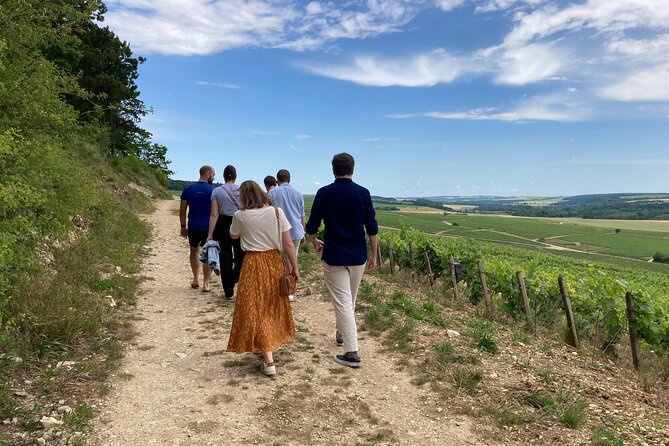
You meet at 5 Bis Rue Jules Rathier in Chablis, and the experience returns to this same point. That simple arrangement matters in a wine region, where an outing can otherwise involve awkward transfers between town, vineyards, and a cellar.
The full activity lasts about two hours. That is long enough to get beyond a quick photo stop and short enough to fit into a day of exploring Chablis. You should arrive ready to walk, not dressed for a formal tasting alone. The route takes you into the vineyard, so comfortable clothes and sturdy shoes are more useful than polished city footwear.
The group can include up to 20 people. That is not a private tour, but the maximum is still manageable for a guided walk. If the group is smaller, you can expect more opportunity to ask about pruning, soil, wine labels, and the work behind the bottles.
Confirmation is sent within 48 hours of booking, subject to availability. The tour is offered in English, which makes it a practical choice if you want more than a French-only vineyard visit.
Other vineyard visits we rate around France
- Saint-Émilion: Grand Cru Classé Winery Visit and Tasting
★ 4.6 · 1,118 reviews - Saint Emilion Half-Day Trip with Wine Tasting & Winery Visit from Bordeaux
★ 4.5 · 1,034 reviews - Saint-Émilion: Bordeaux Vineyard Tour and Wine Tasting
★ 4.8 · 578 reviews
Walking through the Chablis Grand Cru vineyards
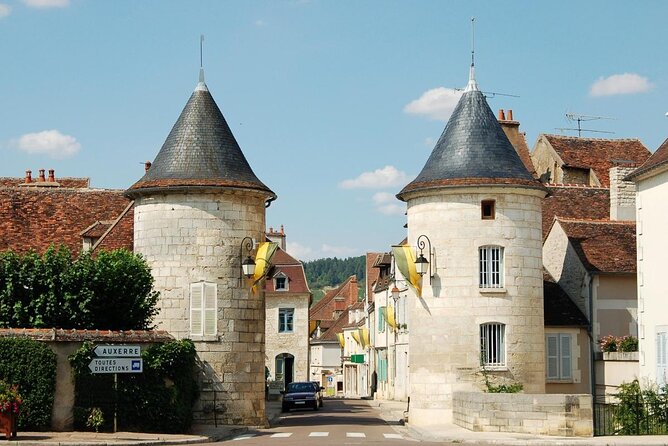
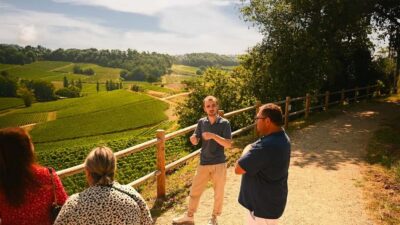
The walk focuses on the Chablis Grand Cru vineyards, with Les Clos singled out as one of the important areas. Here, the point is not simply to admire rows of vines. You learn how the winegrower works and why one part of the Chablis area can produce a different style from another.
The guide explains the four Chablis ranks and helps you connect the categories to the ground beneath your feet. That is valuable because Chablis labels can seem simple until you start comparing Petit Chablis, Chablis, Chablis Premier Cru, and Chablis Grand Cru. Seeing the vineyards gives those names a physical setting.
You also learn about different types of cultivation and the characteristics of the soils. The tour does not treat winemaking as a mysterious art. Instead, it lays out the basic chain: vineyard position, soil, cultivation, grape growing, and cellar work. If you already know a little about wine, this can sharpen your understanding. If you are new to Chablis, it gives you a useful framework before the tasting begins.
The setting provides fine views over the Chablis area from different points. One especially useful aspect is seeing the left and right bank growing regions from higher viewpoints. The views help explain why a relief map or a list of vineyard names is only part of the story. You can see how the area fits together rather than treating each designation as an isolated label.
The route is not described as a paved stroll. One outing included rough terrain and a steep climb near the end. That does not make the activity extreme, but you should have a moderate level of fitness and be comfortable walking on uneven ground. Wear sturdy shoes with a good grip.
What the guide adds to the vineyard walk
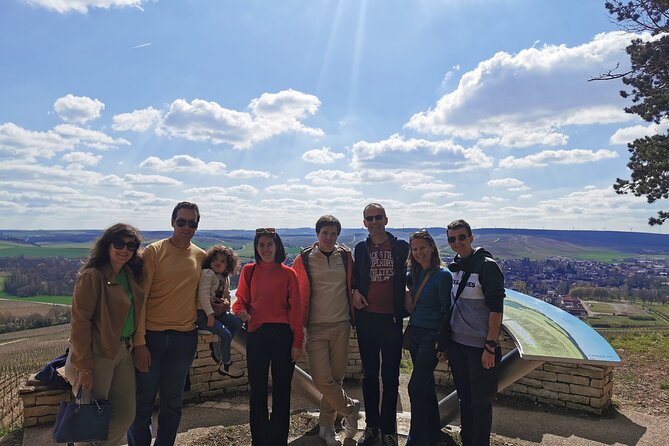
The experience depends heavily on the guide, and the available feedback points to a friendly, informal style. Frédérique is named as a guide on one visit, while the provider is Domaine Céline & Frédéric Gueguen. Expect the focus to stay on practical vineyard work, local soils, and the differences between Chablis wines.
I like this kind of guiding because it gives you a way to read the place. You are not just told that a bottle is Grand Cru. You are shown the area that gives the classification meaning, then asked to taste with that picture in mind.
The tone appears relaxed rather than ceremonial. That suits Chablis well. You can ask direct questions, take in the views, and move at a walking pace. The small-group setting helps, although a full group of 20 will feel less personal than a group of four.
The weather can change the format. Rain has caused the walking portion to be interrupted, with the left and right bank areas visited by car instead. That backup can still provide good views and useful explanations, but it will not feel the same as walking among the vines. If the vineyard walk is your main reason for booking, check the forecast and keep your plans flexible.
Heat is another concern. The vines offer little shade, and a hot day can make the route tiring. One practical suggestion from the experience is to walk in the morning when possible. The supplied schedule does not promise a morning departure, so confirm the start time before booking if heat is a serious concern.
Returning to the cellar for the tasting
After the walk, you return to the cellar for the wine tasting. This is not an afterthought. The tasting is where the vineyard explanations become useful, since you can compare wines after learning about the area that produced them.
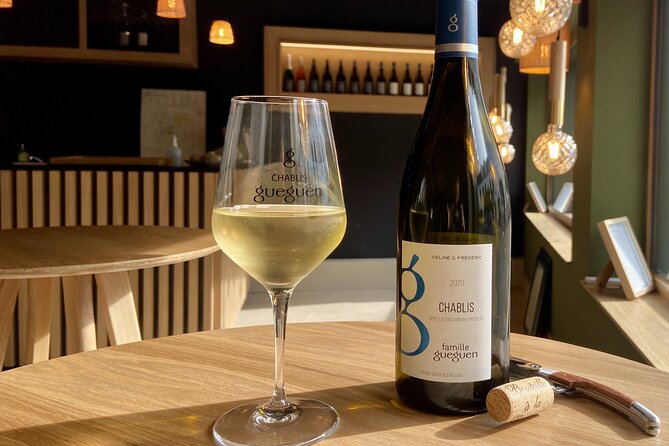
The tasting includes Chablis and Burgundy wines, with a selection described as generous and close to the full range of the estate. You may taste several wines rather than receiving one token sample. The atmosphere is informal, giving you room to discuss what you have just seen.
A key point to understand is that Grand Cru may not always be included in the standard tasting. The provider has explained that Grand Cru can require a small supplement of 5 euros for two Grand Cru wines because stocks are limited. If tasting Grand Cru is important to you, ask about this before or during the visit rather than assuming it is part of the base price.
That detail is not a flaw, but it affects value. The standard tasting still appears broad, and the additional charge is modest. Still, the tour centers on Grand Cru vineyards, so you may reasonably want to taste at least one Grand Cru wine. Availability can also matter because the estate keeps limited quantities.
One visit included quality local dishes with the tasting. Food is not listed as a standard feature in the tour details, so do not book on the assumption that a meal is guaranteed. You may, however, find the tasting more substantial than a quick pour and a sales pitch.
The wines are sold at what one account described as reasonable prices. If you already enjoy Chablis, the cellar gives you a chance to buy directly from the estate. You do not need to purchase wine to benefit from the visit, but direct sales can be useful if you find a bottle you cannot easily locate elsewhere.
Same grapes, a different estate to taste:
- Bordeaux: Vineyards Wine Tasting Half-Day Trip
★ 4.2 · 470 reviews - Half-Day Wine tour across Bordeaux’s Vineyards
★ 3.5 · 429 reviews - Saint-Émilion: Vineyard Walking Tour and Tasting
★ 5.0 · 404 reviews - Small-Group Full-Day Tour of Côte de Nuits, Côte de Beaune Vineyards and Beaune Historical District
★ 5.0 · 364 reviews
Is the $54.07 price good value?
At about $54.07 per person, this is not the cheapest way to taste Chablis. You are paying for more than a cellar pour, though. The price covers a guided vineyard walk of roughly two hours, explanations of the winegrower’s work, views across the Grand Cru area, and a substantial tasting of Chablis and Burgundy wines.
I see the best value for people who want context. If all you want is to sample wine, a tasting at a village cellar may cost less and take less time. If you want to understand why Chablis wines differ and see the vineyards that give the labels their meaning, the walk adds something a counter tasting cannot.
The value also depends on the weather. On a cool, clear day, the vineyard portion is likely to be the heart of the experience. In heavy rain, part of it may become a car visit. You still receive the guide’s explanations and the cellar tasting, but the outdoor element becomes less direct.
The Grand Cru supplement is worth factoring in if you want the complete wine comparison. At 5 euros for two Grand Cru wines, it is not a major extra cost, but the standard price does not necessarily include those pours.
Who will enjoy this Chablis experience?
I would recommend this outing to wine drinkers who want to understand place, not just taste labels. It also suits couples, small groups, and families with adults who enjoy a walk while others focus on wine. People under 18 may join the activity, but only those over 18 may consume alcohol.
It is also a good choice for anyone who has already seen a relief map or heard about the different Chablis climats but wants to make the information real. The vineyard viewpoints show how the named areas relate to one another.
You should think twice if you dislike uneven ground, steep climbs, heat, or weather-dependent plans. This is not a flat village stroll. A moderate fitness level is expected, and sturdy shoes are a smart choice.
Service animals are allowed. The provided information does not give details about wheelchair access, child pricing, or a nonalcoholic tasting option, so ask the provider directly if any of those points affect your decision.
Booking, weather, and cancellation details
The experience is often booked about 31 days ahead, so it makes sense to reserve early if your Chablis dates are fixed. Confirmation arrives within 48 hours, subject to availability.
You can cancel for a full refund up to 24 hours before the local start time. Changes or cancellations made less than 24 hours ahead are not accepted for a refund. If bad weather causes the provider to cancel the activity, you are offered another date or a full refund.
I would avoid placing this tour on the only open morning of a tightly scheduled trip. Weather can alter the outdoor plan, and a little flexibility gives you a better chance of enjoying the vineyards as intended.
Should you book the Grand Cru vineyard walk?
Book it if you want a practical introduction to Chablis terroir, a real walk through the Grand Cru area, and a generous tasting afterward. The strongest parts are the views from different vineyard positions, the explanation of the four Chablis ranks, and the chance to connect the soil and cultivation to what ends up in your glass.
Skip it if you want a purely indoor tasting, a flat walk, or a guaranteed Grand Cru pour without an extra charge. For everyone else, the price is fair for a two-hour experience that combines scenery, wine education, and estate tasting in one stop. Check the weather, wear solid shoes, and ask about the Grand Cru supplement so the visit matches your expectations.
FAQ
Where does the Chablis vineyard walk begin?
The activity begins at 5 Bis Rue Jules Rathier, 89800 Chablis, France.
Where does the experience end?
It ends back at the meeting point in Chablis.
How long does the tour last?
The experience lasts approximately two hours.
Is the tour offered in English?
Yes. English is one of the offered languages.
Is the Grand Cru wine included in the tasting?
Grand Cru wine may require a small supplement. The provider has stated that two Chablis Grand Cru wines can be tasted for an additional 5 euros, subject to limited stock.
What happens if the weather is poor?
The experience requires good weather. If the provider cancels because of poor conditions, you are offered a different date or a full refund.
Newly reviewed vineyards around France
- Vosne-Romanée: Private Vineyards Walking Tour with Tasting★ 4.4 · 9 reviews
- Vineyard of the Alpilles by bike★ 4.6 · 8 reviews
- Vineyard tour and wine tasting in Davron★ 4.5 · 7 reviews
- Private Vineyard Tour and Wine Tasting in Bandol★ 5.0 · 16 reviews
- Vineyard visit in Gyropode, visit of Cave & Tasting Wines of Bandol★ 5.0 · 19 reviews
- Bike ride on the Wine Route from Sélestat★ 5.0 · 5 reviews
- Horse riding in the vineyards of Grimaud + wine tasting★ 5.0 · 3 reviews
- 1/2 day private Vintage tour, vineyards of Saint-Tropez★ 5.0 · 6 reviews
France Vineyard Tours, compared.
Saint-Émilion: Grand Cru Classé Winery Visit and Tasting
Read our review →
Saint Emilion Half-Day Trip with Wine Tasting & Winery Visit from Bordeaux
Read our review →
Saint-Émilion: Bordeaux Vineyard Tour and Wine Tasting
Read our review →
Saint-Émilion: Vineyard Walking Tour and Tasting
Read our review →
Small-Group Full-Day Tour of Côte de Nuits, Côte de Beaune Vineyards and Beaune Historical District
Read our review →
Lists this tour appears in