Review · STRASBOURG
Bike ride on the Wine Route from Sélestat
The best part of this outing is the calm ride from Sélestat to Bergheim, where vineyards, old villages, and the Vosges foothills replace busy roads. You get a close look at Alsace by bicycle, with a private guide rather than a large coach group. Cédric, the guide named in the tour information, speaks English, French, and German.
I like the easy e-bikes and the small maximum of six people. I also like the local stops: cheese, sweets, and an Alsace wine tasting give the ride a human touch that a simple countryside spin would miss.
The main thing to consider is the three-hour limit. You’ll see several appealing places, including Bergheim and Haut-Koenigsbourg Castle, but this is a compact introduction, not a full castle tour or a long wine-country day.
Key points to know before you book
- The ride begins at Sélestat train station, making it practical if you are coming from Strasbourg by train.
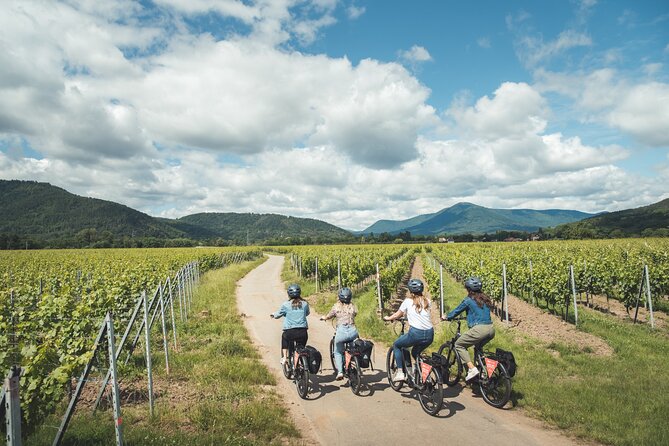
- Cycle track 5 leads toward Bergheim through the Alsace vineyards and is described as Europe’s longest cycle track.
- Cédric guides the private ride and can communicate in English, French, and German.
- The route includes local tasting stops, with wine, cheese, and sweets mentioned as part of the experience.
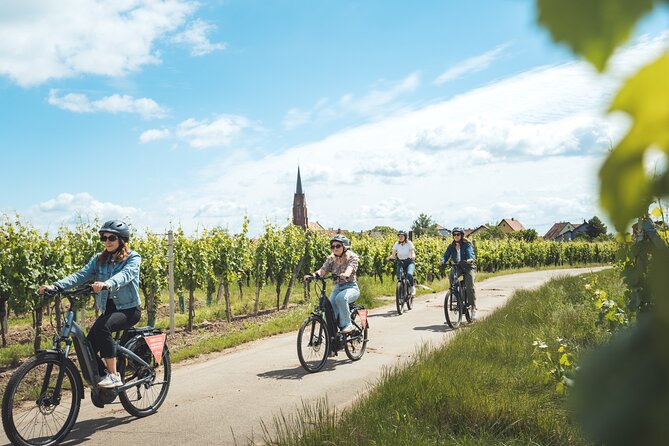
- E-bikes, helmets, and bottled water are included, useful for a relaxed ride without bringing much gear.
- The group is capped at six people, but you should still have a moderate level of fitness and be ready to ride in good weather.
Why this Sélestat bike ride works so well
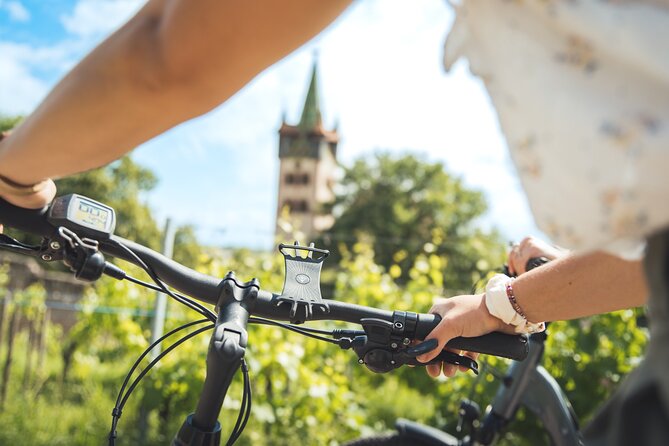
Alsace is easy to admire from a car window, but a bicycle gives you a better sense of its scale. From Sélestat, the route heads toward the foothills on cycle track 5, passing vineyards and small villages at a pace that lets you notice more than road signs and parking lots.
I like this format because the ride is active without being built around speed. The e-bike helps you handle the countryside with less effort, especially as the flat plain begins to meet the rising ground near the Vosges. You still pedal, but the motor makes the ride more approachable for anyone who is not a regular cyclist.
The private format matters, too. With no more than six people, the guide can keep the pace manageable and answer questions as you go. This is a better fit than a large group if you want time to stop, take pictures, or ask about the villages and vineyards.
The tour is listed at $70.29 per person for about three hours. That is a fair price if you value the e-bike, helmet, water, private guide, and tasting elements together. You are not simply renting a bicycle. You are paying for the route, local direction, and the ease of getting between Sélestat, Bergheim, and the surrounding wine country without arranging your own transport.
More Vineyard Bike Tours in France
- Small Group Guided E-bike Tour in Nice’s Organic Vineyard
★ 5.0 · 220 reviews - Bordeaux: St-Emilion Vineyards e-Bike Tour with Wine & Lunch
★ 4.9 · 181 reviews - Through Alsace Vineyards and Wine Villages Private Bike Tour
★ 5.0 · 47 reviews
Starting at Sélestat station
The meeting point is Place de la Gare, at Sélestat’s train station. This is one of the most useful details about the outing. Sélestat is reachable from Strasbourg, and one couple specifically arrived from Strasbourg by train before meeting Cédric with the e-bikes.
That setup keeps the day simple. You do not need to find a vineyard parking lot or work out a transfer into the countryside. You can arrive by public transport, meet at a clear central point, and begin riding from there.
Sélestat itself gives the tour a good starting point. The town lies in the Alsace plain, at the foot of the Vosges, with the Ill River and the wetland area known as the Grand Ried nearby. Its past reaches back to the eighth century. In the Middle Ages and Renaissance, Sélestat grew as a Free City of the Holy Roman Empire and a member of the Decapolis, the group of ten Alsatian imperial cities.
You will not get a full history tour of Sélestat in three hours, but its setting explains why the ride works. The town sits between open plain and wooded mountain country, with the vineyards beginning toward the western edge. It also once had a port on the Ill and a belt of ramparts, reminders that this was an important town long before it became a practical train stop for modern visitors.
Pedaling toward Bergheim on cycle track 5
The ride follows cycle track 5 from Sélestat toward Bergheim. The route is described as the longest cycle track in Europe, though the tour gives you only one section of it. That is still enough to put you into the countryside quickly and keep you away from the stress of major roads.
I like the way an established cycle route shapes the outing. You can pay attention to the vineyards and villages instead of worrying about every turn. The route also gives the guide room to adjust the pace for the group, which matters when some riders are comfortable on bikes and others are new to e-bikes.
If you have never used an e-bike, the controls may seem unfamiliar at first. The good news is that the basic idea is simple: you pedal, and the motor adds assistance. One person on the tour had never used an e-bike and found it easy and intuitive. That makes this a reasonable choice for a first e-bike experience, provided you can ride a standard bicycle and maintain a moderate level of fitness.
You should still expect physical activity. An e-bike is not a scooter, and the tour description asks for moderate fitness. Wear clothing you can move in and shoes suited to cycling. The helmet is included, as is bottled water.
Vineyards, villages, and the Alsace plain
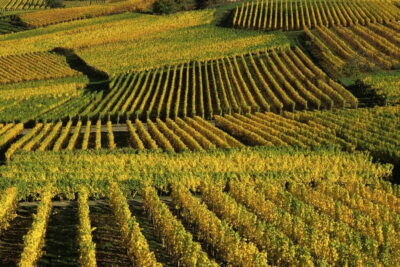
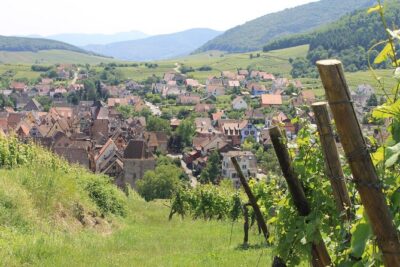
The route shows you the classic Alsace combination: orderly vineyards, old settlements, and the Vosges rising behind them. This is not a strenuous mountain ride, but the western edge of the plain can feel more rolling as you approach the hills.
The scenery changes slowly, which is part of its appeal. You have time to see the rows of vines and the shape of the villages rather than rushing past them. The ride also gives you a sense of how close the vineyards are to the towns. This is working countryside, not a stage set made only for sightseeing.
The village stops are important because Alsace is best understood at street level. A quick look at a village can show you more about the region’s daily life than another distant viewpoint. The supplied details do not promise a fixed list of every village along the route, so you should think of the ride as a guided passage through the wine country rather than a checklist of named stops.
The guide adds value here. Cédric can explain what you are seeing in English, French, or German. That language range is especially useful in Alsace, where place names, local traditions, and regional history may otherwise be harder to follow.
More Wine Country Day Trips in France
- Alsace Wine Route Small Group Half-Day Tour with Tasting from Strasbourg
★ 4.5 · 291 reviews - Alsace Wine Route Wineries & Tasting Small Group Guided Tour from Strasbourg
★ 5.0 · 229 reviews - ICONICS Tour: 1/2 day on the Wine Route, visit of 2 Villages + Tasting.
★ 5.0 · 159 reviews - From Lyon: Beaujolais Wine Route Half-Day Tour
★ 4.7 · 119 reviews
Bergheim, a walled wine village near the Vosges
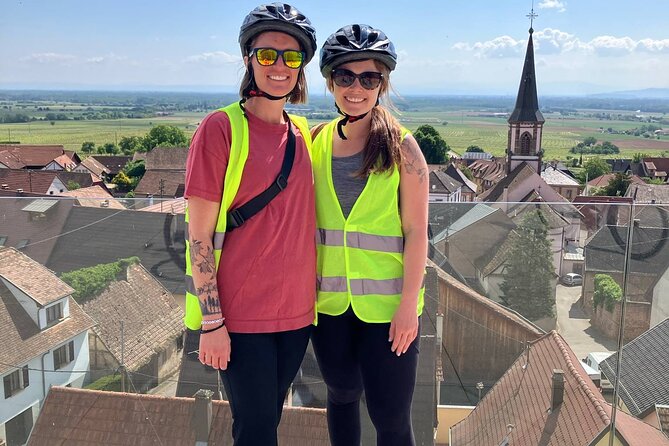
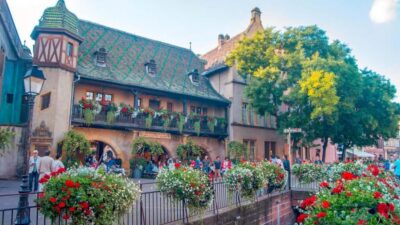
Bergheim is the main village destination on the route. It sits about 10 kilometers southwest of Sélestat and 17 kilometers north of Colmar, in the hilly edge of the Alsace plain. The Vosges mountains are only about two kilometers away, and their eastern slope rises sharply.
That location gives Bergheim a strong visual setting. You are close enough to the mountains to feel their presence, but still in the vineyard country of the plain. The village also sits among well-known Alsace destinations such as Ribeauvillé, Saint-Hippolyte, and Thannenkirch.
The tour is not presented as a formal architectural walk, so you should not expect a detailed guided examination of every building. Instead, Bergheim works as a pause in the ride, a place to slow down and enjoy the village setting before returning to the route.
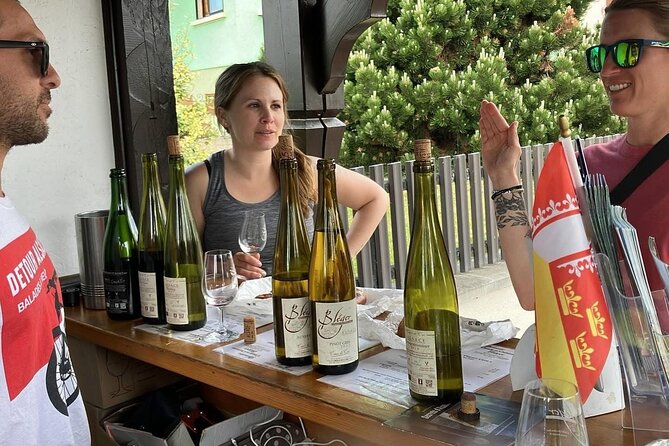
This is also where the tasting element becomes important. The experience includes wine tasting, and one stop included cheese and sweets as well. That combination makes the break feel connected to the region rather than added as a generic refreshment stop. You can taste some local character without giving up most of your afternoon.
Keep in mind that wine tasting may not suit everyone. If you do not drink alcohol, the bicycle ride, villages, and castle views still provide the core of the experience, but you may find the tasting portion less useful.
What to expect from Haut-Koenigsbourg Castle
Haut-Koenigsbourg Castle is included among the places associated with the route. The medieval castle sits in the commune of Orschwiller, in the Bas-Rhin department of Alsace, above the wine-country corridor.
From a sightseeing point of view, the castle adds scale to the day. The villages and vineyards show you the region at ground level, while Haut-Koenigsbourg connects the view to the fortified past of the Vosges foothills. It is the kind of landmark that helps explain why this part of Alsace has such a strong medieval identity.
You should be careful about what the three-hour schedule can include. The information provided identifies the castle as a stop, but it does not state that admission, an interior visit, or a guided castle tour is included. Do not book this experience if your main goal is a long visit inside Haut-Koenigsbourg. Think of the castle as part of the route and scenery unless the operator confirms a particular entry plan.
That distinction also helps explain the tour’s value. You receive a quick, active overview of several Alsace highlights. You do not spend the entire afternoon at one landmark, and you avoid arranging separate transport between Sélestat, the vineyards, Bergheim, and the castle area.
The tasting break adds more than a snack
A bicycle tour can sometimes feel like sightseeing with a fitness requirement attached. The tasting stop changes the rhythm. Cheese, sweets, and wine give you a chance to pause and connect the ride to local food traditions.
I especially like this part for first-time visitors to Alsace. Wine villages can blur together when you see them only from a road. A tasting gives you a reason to stop and pay attention to the place, even if you know little about regional wine.
The available information does not specify the winery, the number of wines, or the exact tasting menu. You should not expect a full wine course. This is a modest regional tasting within a short bike outing, not a separate cellar tour.
The stop may also be a good moment to ask Cédric questions about the route or the villages. A private guide can make these small pauses feel more personal than a fixed group schedule, although the exact amount of conversation will depend on the group and the day.
Timing, group size, and practical comfort
At about three hours, this is a half-day activity with room to pair it with another visit in the region. You can use the rest of the day for Sélestat, Colmar, Strasbourg, or a longer stop at a castle, depending on your plans.
The maximum group size is six. That is small enough for a more personal ride and easier communication with the guide. It also means the tour is not designed for a large family reunion or a big organized group.
The activity requires good weather. That is worth taking seriously because cycling is exposed to rain, wind, and heat. The cancellation terms allow a full refund if you cancel at least 24 hours before the start time. If poor weather causes the operator to cancel, you are offered another date or a full refund.
The meeting point is near public transportation, and the start and finish are both at Place de la Gare in Sélestat. This makes the outing easier to fit into a rail-based trip. You should confirm the exact meeting instructions at booking, but the supplied details clearly indicate that the activity returns to the starting point.
Who should book this ride
I would choose this tour if you want to see Alsace by moving through it rather than checking off sights from a bus. It suits you especially well if you enjoy:
- A small private group rather than a large guided outing
- A gentle introduction to e-biking
- Vineyards and village scenery
- A local wine, cheese, and sweets tasting
- Easy access from Strasbourg by train
- A guide who can speak English, French, or German
It is also a good choice for couples or small groups with mixed cycling experience. The e-bike reduces the strain, and the route is not presented as an intense athletic challenge.
I would look elsewhere if you want a full-day cycling expedition, a serious wine education, or an extended interior visit at Haut-Koenigsbourg Castle. The three-hour format gives you variety, but not much time at each place. You should also reconsider if you dislike riding outdoors or cannot manage moderate physical activity.
Is the $70.29 price good value?
At $70.29 per person, the tour offers a useful bundle: e-bike, helmet, bottled water, private guiding, a small group, and a tasting-oriented route. If you had to rent an e-bike and plan the route yourself, you would also spend time figuring out cycle paths, village stops, and transport back to Sélestat.
The strongest value is convenience. You can arrive at the train station, collect the bike, follow a prepared route, and finish where you started. That is a practical advantage for a visitor based in Strasbourg or someone touring Alsace without a car.
The price is less compelling if you already have a bicycle, know the wine route well, and prefer to explore independently. You are paying mainly for the guide and the smooth organization, not for a long list of included attractions or a full castle admission.
Should you book this Sélestat wine-route ride?
Book it if you want a relaxed, active introduction to Alsace with real countryside, a pretty wine village, and a guide who can make the route easy to follow. The combination of small group, simple e-bike handling, and local tasting is the tour’s strongest point.
For the best fit, arrive ready to ride, allow for weather changes, and keep your expectations focused on a three-hour overview. You will see more than you would on a short walk through one village, but you will not have time for an exhaustive castle visit or a full wine-country tour. For a compact first look at the Sélestat and Bergheim area, the outing offers a sensible mix of scenery, movement, and local flavor.
FAQ
Where does the bike tour start?
The tour starts at Place de la Gare, at Sélestat train station, 67600 Sélestat, France.
Where does the activity finish?
The activity ends back at the meeting point at Sélestat train station.
How long does the experience last?
The ride lasts approximately three hours.
Is the tour offered in English?
Yes. The experience is offered in English. Guide Cédric is also described as fluent in French and German.
Are bicycles and safety equipment included?
Yes. E-bikes, helmets, and bottled water are included.
How many people can join the tour?
The tour has a maximum of six people.
Can I cancel for a full refund?
Yes. You can receive a full refund if you cancel at least 24 hours before the experience start time. If poor weather causes the operator to cancel, you are offered another date or a full refund.
Newly reviewed vineyards around France
- Vosne-Romanée: Private Vineyards Walking Tour with Tasting★ 4.4 · 9 reviews
- Vineyard of the Alpilles by bike★ 4.6 · 8 reviews
- Vineyard tour and wine tasting in Davron★ 4.5 · 7 reviews
- Private Vineyard Tour and Wine Tasting in Bandol★ 5.0 · 16 reviews
- Vineyard visit in Gyropode, visit of Cave & Tasting Wines of Bandol★ 5.0 · 19 reviews
- Horse riding in the vineyards of Grimaud + wine tasting★ 5.0 · 3 reviews
- 1/2 day private Vintage tour, vineyards of Saint-Tropez★ 5.0 · 6 reviews
- Vineyard of the Alpilles by bike★ 5.0 · 10 reviews
Strasbourg Vineyard Tours, compared.
Alsace Wine Route Small Group Half-Day Tour with Tasting from Strasbourg
Read our review →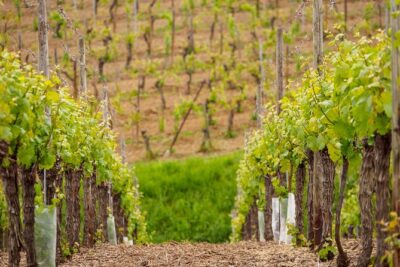
Alsace Wine Route Wineries & Tasting Small Group Guided Tour from Strasbourg
Read our review →