
Review · FRANCE
Bordeaux: Explore an Organic Family Vineyard with Tasting
Pestoury Vineyard gives you something many grand Bordeaux estates cannot: a direct introduction to winemaking from the family that actually works the vines. In 90 minutes, Marie, Isabelle, or Bertrand takes you from a map of Bordeaux’s 65 appellations to the vineyard, cellar, and tasting table.
I like the small-group format, limited to 10 people, and the chance to ask real questions without being lost in a crowd. I also like the generous tasting, which can include up to 10 wines across several styles. The main consideration is transport: you must arrange your own way to the vineyard, and the outdoor portion depends on the weather.
Key points
- Five generations at Pestoury Vineyard: You learn the family story from a relative who grew up among the vines.
- Bordeaux in one useful map: The opening explanation covers 65 appellations and puts the tasting in context.
- Organic farming since 2020: The family explains how its changing methods affect soil, wildlife, and vineyard work.
- A full look at production: See the tanks and barrels used for white, rosé, and red wines.
- Up to 10 wines for $21: The tasting can include dry and sweet whites, rosé, several reds, sparkling wines, and grape juice.
- Easy pace for beginners: Marie explains how to look, smell, and taste, so you do not need prior wine knowledge.
A family vineyard instead of a formal wine show
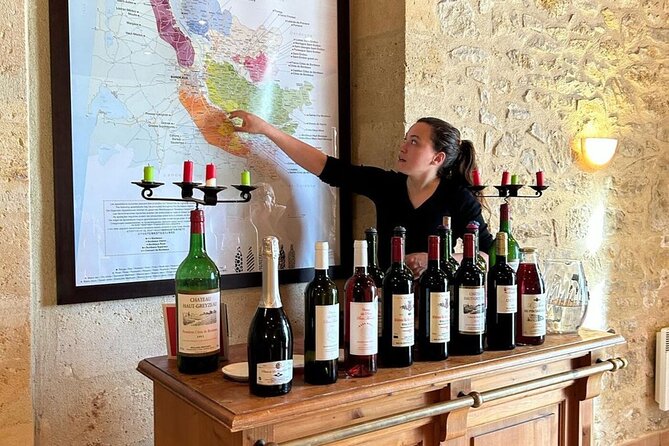
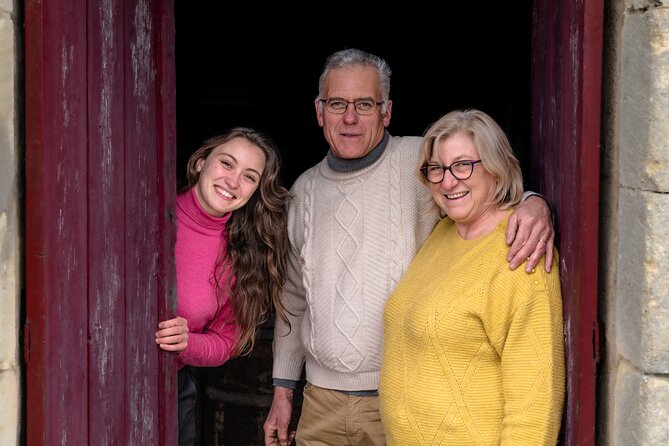
Pestoury Vineyard is a practical choice if you want to meet the people behind the bottles. This is a family-run operation with five generations of connection to the property, and the tour is led by one of those family members rather than a detached presenter.
Marie leads most visits, while Isabelle and Bertrand also guide tours. The tone is personal and flexible. You can ask about grape varieties, fermentation, organic farming, or the family business, and the guide can shape the conversation around your interests.
That personal scale matters in Bordeaux. The region is famous for important names and expensive bottles, but wine is also made by families who work with a much smaller set of resources. At Pestoury, you see that side of the region directly.
The visit is limited to 10 participants. That is small enough for a useful conversation, though the experience is still a group tour rather than a private appointment. If you prefer a polished, grand château presentation, this may feel modest. If you want a closer look at everyday wine production, the setting should suit you well.
More Organic Wineries in France:
- Small Group Guided E-bike Tour in Nice’s Organic Vineyard
★ 5.0 · 220 reviews - Saint-Didier: visit a vineyard & taste organic wines
★ 5.0 · 15 reviews - Small Group Guided E-Bike Tour in Nice’s Organic Vineyard
★ 4.9 · 10 reviews
Start with Bordeaux’s 65 appellations
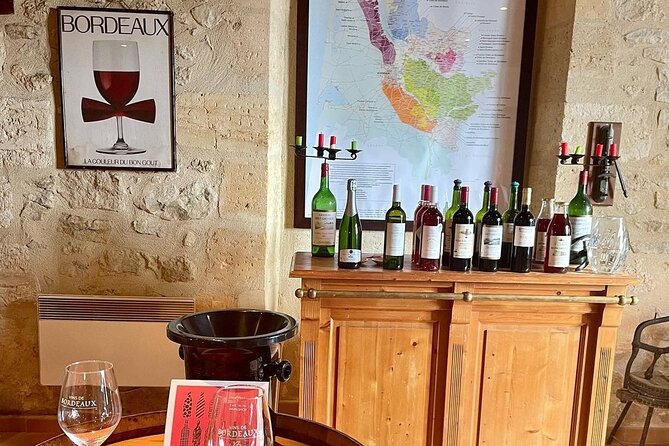
The tour begins around a detailed map of Bordeaux. This is more than a quick geography lesson. Bordeaux wine labels can be confusing because the name on a bottle may refer to a broad region, a smaller appellation, a style, or a particular family estate.
The map helps you understand why wines from the same general area can taste different. Bordeaux has 65 appellations, and the land, soil, grape varieties, and local traditions change from one area to the next. That background makes the later tasting easier to follow.
I like this opening because it gives you a framework before the technical details begin. Instead of hearing isolated words about grapes and barrels, you get a sense of how the region is organized.
The introduction also covers Bordeaux’s range of wine styles. The area is strongly associated with red wine, but the tasting here can include dry white, sweet white, rosé, sparkling wine, and red wines from the Côtes de Bordeaux. That variety helps correct the common idea that Bordeaux is only about full-bodied reds.
Among the vines: soil, seasons, and organic farming
If the weather allows, the next part takes place outdoors by the vines. This is where the family explains how wine begins long before fermentation. The discussion connects grape flavor and texture to the vine, soil, climate, and seasonal work.
You learn about the vineyard’s grape varieties, terroir, and soils, along with the way the vines change through the year. The details are useful because they show why winemaking is not simply a matter of picking grapes and putting them in a tank. Timing and conditions affect what the family can do later.
Since 2020, Pestoury has been working toward organic farming practices. The guide explains the environmental side of that change, including its effect on biodiversity. You can ask what organic methods mean in practical terms for the vines, the surrounding life, and the amount of work required.
The phrase working toward is important. The information does not present the vineyard as having completed every step of an organic certification process. Instead, you hear about an ongoing change in farming methods. That makes the discussion more useful and honest than a broad claim about being environmentally friendly.
A rainy day does not necessarily ruin the visit. The vineyard portion may be less comfortable, so wear weather-appropriate clothing and sturdy, comfortable shoes. The cellar and tasting still give the tour substance, but the outdoor section is clearly best enjoyed in decent weather.
Inside the cellar, from fermentation to bottle
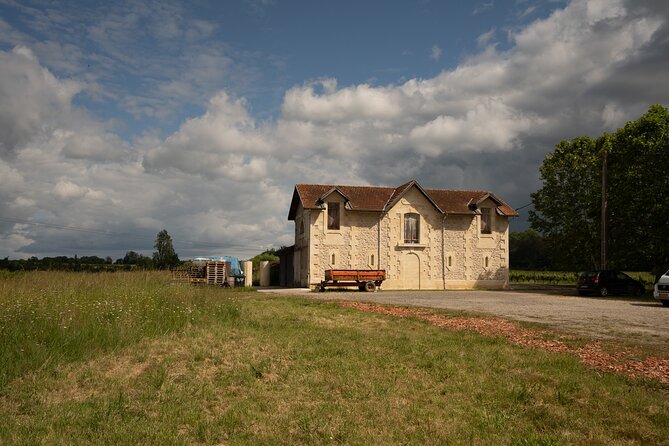
The cellar is the working heart of the visit. Here, you follow the basic path from harvested grapes to finished wine, with explanations of fermentation, aging, and bottling.
You see the tanks and barrels used for different types of wine. The family explains how the equipment affects flavor and texture in white, rosé, and red wines. This is a good section for beginners because it turns abstract winemaking language into visible objects and decisions.
Timing receives attention too. The guide discusses when the grapes are harvested and when the wines are bottled, along with the reasons those decisions matter. You get a clearer idea of why two wines made from related grapes can still differ in body, aroma, and texture.
Do not expect a giant industrial winery or a tour filled with elaborate machinery. Pestoury is a family vineyard, and that is the point. The cellar experience is about seeing the methods and choices that support the wines you are about to taste.
I would pay close attention here even if you are more interested in drinking than production. Understanding what happens in the tank or barrel gives you better questions at the tasting table, and it helps you notice why wines are presented in a particular order.
Other vineyard visits we rate around France
- Saint-Émilion: Grand Cru Classé Winery Visit and Tasting
★ 4.6 · 1,118 reviews - Saint Emilion Half-Day Trip with Wine Tasting & Winery Visit from Bordeaux
★ 4.5 · 1,034 reviews - Saint-Émilion: Bordeaux Vineyard Tour and Wine Tasting
★ 4.8 · 578 reviews - Bordeaux: Vineyards Wine Tasting Half-Day Trip
★ 4.2 · 470 reviews
The tasting: a broad tour of Bordeaux styles
The tasting is the payoff, and the selection is unusually broad for a $21 visit. Depending on availability and the pace of the group, you may try up to 10 wines.
The range can include:
- Bordeaux Blanc Sec, a dry white
- Sweet white wine
- Bordeaux Rosé
- Several Côtes de Bordeaux reds
- Sparkling wines
- House-made grape juice, when available
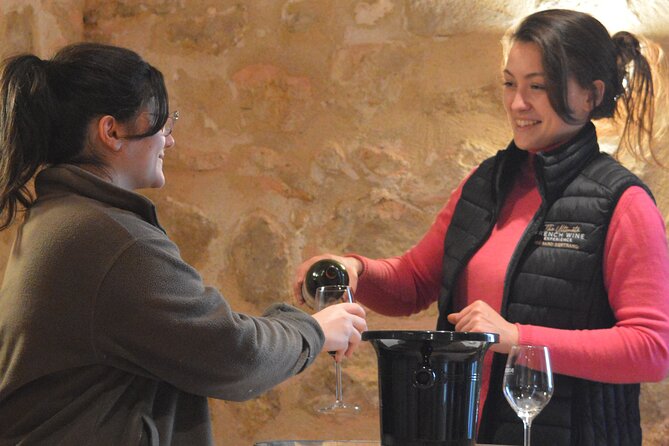
The tasting is guided rather than simply poured without explanation. Marie teaches the basic sequence of looking, smelling, and tasting. You do not need to know how to describe wine in polished terms. The point is to pay attention and connect the senses with what you learned in the vineyard and cellar.
The selection also gives you a practical comparison. You can move from a crisp dry white to a sweeter style, then to rosé, red, and sparkling wine. That makes the visit useful for people who are still working out what they like.
The number of pours can vary. Some groups have tasted seven wines, while others have tried 10, so you should think of up to 10 as the upper end rather than a fixed promise. Availability also affects the house-made grape juice and certain bottles.
If someone in your party does not drink wine, the grape juice, when available, gives that person something to taste. More important, the vineyard and cellar portions do not depend on drinking alcohol, so non-drinkers can still follow the production story and ask questions.
Why the tasting offers good value at $21
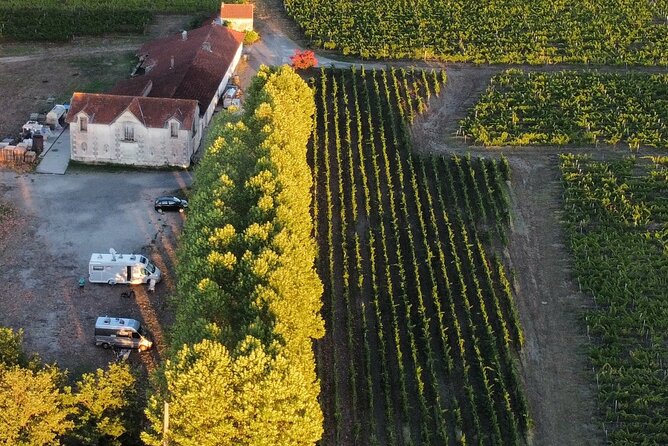
At $21 per person, this is one of the more affordable ways to get a guided Bordeaux wine experience. You are not paying only for a tasting. The price covers a family-led regional introduction, vineyard visit, cellar explanation, and guided sampling.
Value depends partly on what you want. If you only want a quick glass of wine, you can find simpler options elsewhere. If you want to understand how Bordeaux wine is made and taste several styles in one sitting, the price is strong.
The tasting can also help you decide what to buy. Extra bottles are not included, but wine is available for purchase after the visit. You can try before choosing instead of guessing from a label or buying a bottle based only on the name of an appellation.
The family focus adds value in a different way. You hear about five generations of work and the current move toward organic farming from someone directly involved in the vineyard. That connection gives the visit a sense of place that a generic tasting room may not provide.
Who will enjoy this 90-minute visit
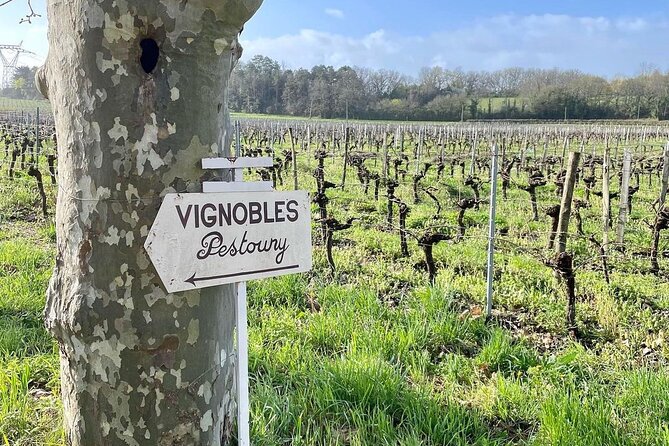
I would recommend Pestoury to first-time wine visitors, couples, families, and anyone who wants a clear introduction without a full day of château hopping. The explanations are designed for mixed levels, so an experienced wine drinker can ask detailed questions while a beginner can learn the basics without feeling out of place.
It also suits people who prefer smaller groups. With a maximum of 10 participants, the guide can answer questions and adjust the discussion. Several visits have felt especially personal when the group was very small, including a morning when only a few people attended.
The tour works well for supporters of family businesses. You are not just seeing a vineyard, you are learning how a multigenerational operation farms, makes, and presents its wine.
It is less suitable if you want an estate with grand architecture, formal dining, or a long restaurant meal. The listed experience lasts 90 minutes and focuses on vines, production, and tasting. You should choose it for the working vineyard story rather than for luxury surroundings.
Practical details before you book
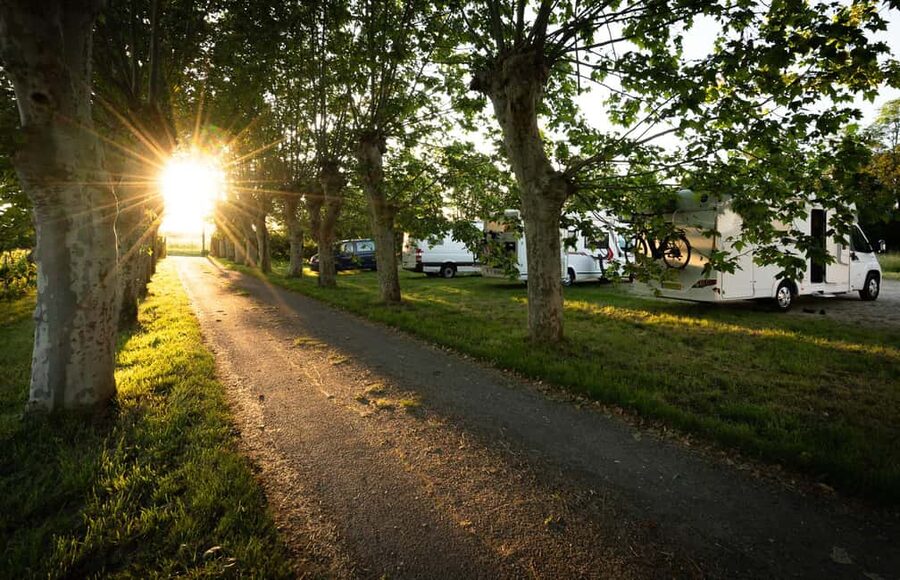
The tour is offered in English and French. If you need an English explanation, select or confirm that option when booking. Marie most often leads the visit, with Isabelle or Bertrand also guiding at times.
You arrange your own transportation to and from the vineyard. The provider can offer guidance about transport options, but transport is not part of the $21 price. Check the exact meeting details and allow enough time to arrive without rushing.
Wear comfortable shoes. The tour can include walking among the vines, and weather conditions may affect the outdoor section. Bring clothing suited to the forecast, especially if you are visiting outside the warmer months.
The experience is wheelchair accessible, though you should still confirm any personal mobility needs in advance, particularly if you want detailed information about the outdoor route.
Booking is flexible: you can reserve now and pay later, and cancellation is free up to 24 hours before the visit for a full refund. Starting times depend on availability, so check the schedule before building the rest of your Bordeaux day around it.
A friendly guide makes the difference
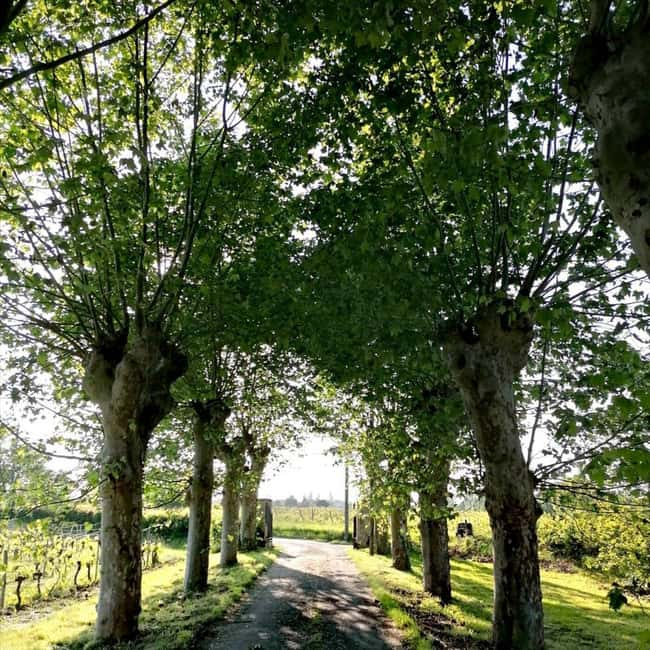
The strongest part of the visit is the guide’s ability to make technical information feel relaxed. Marie grew up around the vineyard and presents the family’s work with clear enthusiasm. Isabelle also leads tours and can make the visit engaging even when the group is very small.
That warmth shows in small details. One early-arriving group was offered coffee, and the guides are prepared to spend time answering questions rather than rushing through a fixed speech.
The style is informative without requiring you to be a wine expert. You can ask why a wine tastes sweet, how barrels affect texture, or what organic farming changes in the vineyard. The family’s connection to the work gives those answers a practical edge.
The visit can also be enjoyable in the off-season. A rainy February outing still included the family story, production information, and tasting, though you should expect a less pleasant time outdoors. If you are visiting Bordeaux in cooler months, this is a sensible indoor-friendly wine activity, provided you dress properly.
Should you book Pestoury Vineyard?
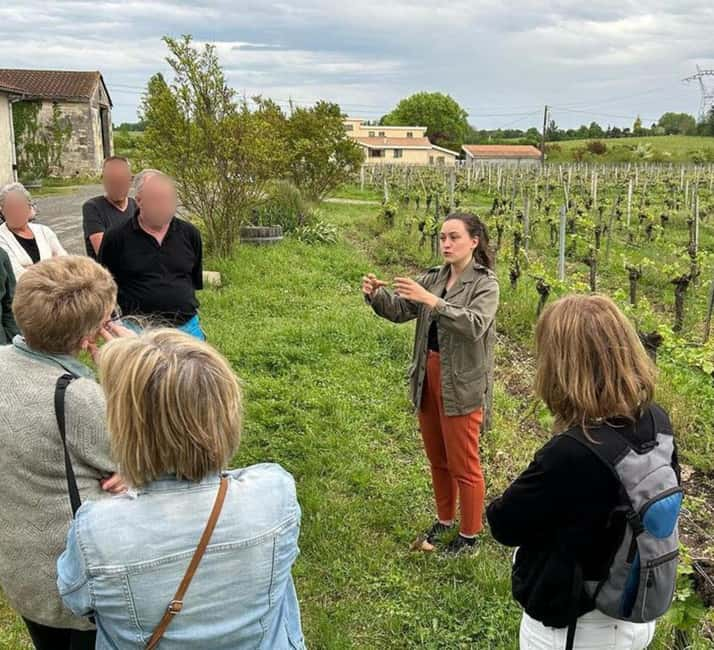
Book this tour if you want an affordable, personal introduction to Bordeaux wine rather than a grand-estate spectacle. The strongest reasons are the five-generation family story, the small group, the clear explanation of organic farming, and the chance to taste a wide range of wines for $21.
Skip it if your main goal is luxury architecture, a long meal, or included transportation. For everyone else, Pestoury offers a well-paced look at the full process, from soil and vines to tanks, barrels, bottles, and the glass in front of you.
The best booking choice is a day with decent weather, comfortable shoes, and enough time to travel to the vineyard independently. Come curious, not overly prepared. Marie and her family provide the context, and the tasting gives you a useful way to put it all together.
FAQ
How long does the Pestoury Vineyard tour last?
The visit lasts 90 minutes. It includes an introduction to Bordeaux, time among the vines when weather permits, a cellar tour, and a guided wine tasting.
How many wines can I taste?
You can taste up to 10 wines, depending on availability and the tasting schedule. The selection may include dry white, sweet white, rosé, Côtes de Bordeaux reds, and sparkling wines.
Is grape juice available for people who do not drink wine?
House-made grape juice is available subject to availability. The tour also includes the vineyard, cellar, and winemaking explanations, so you can take part without drinking wine.
Who leads the tour?
The visit is led by a member of the Pestoury family. Marie leads most tours, while Isabelle and Bertrand also guide visits.
Is transportation included?
No. You arrange your own transportation to and from the vineyard. The provider can offer guidance about transport options if needed.
Can I cancel or pay later?
You can reserve and pay later, and you can cancel up to 24 hours in advance for a full refund. Starting times depend on availability.
Newly reviewed vineyards around France
- Vosne-Romanée: Private Vineyards Walking Tour with Tasting★ 4.4 · 9 reviews
- Vineyard of the Alpilles by bike★ 4.6 · 8 reviews
- Vineyard tour and wine tasting in Davron★ 4.5 · 7 reviews
- Private Vineyard Tour and Wine Tasting in Bandol★ 5.0 · 16 reviews
- Vineyard visit in Gyropode, visit of Cave & Tasting Wines of Bandol★ 5.0 · 19 reviews
- Bike ride on the Wine Route from Sélestat★ 5.0 · 5 reviews
- Horse riding in the vineyards of Grimaud + wine tasting★ 5.0 · 3 reviews
- 1/2 day private Vintage tour, vineyards of Saint-Tropez★ 5.0 · 6 reviews
France Vineyard Tours, compared.
Saint-Émilion: Grand Cru Classé Winery Visit and Tasting
Read our review →
Saint Emilion Half-Day Trip with Wine Tasting & Winery Visit from Bordeaux
Read our review →
Saint-Émilion: Bordeaux Vineyard Tour and Wine Tasting
Read our review →
Saint-Émilion: Vineyard Walking Tour and Tasting
Read our review →
Small-Group Full-Day Tour of Côte de Nuits, Côte de Beaune Vineyards and Beaune Historical District
Read our review →
Lists this tour appears in