
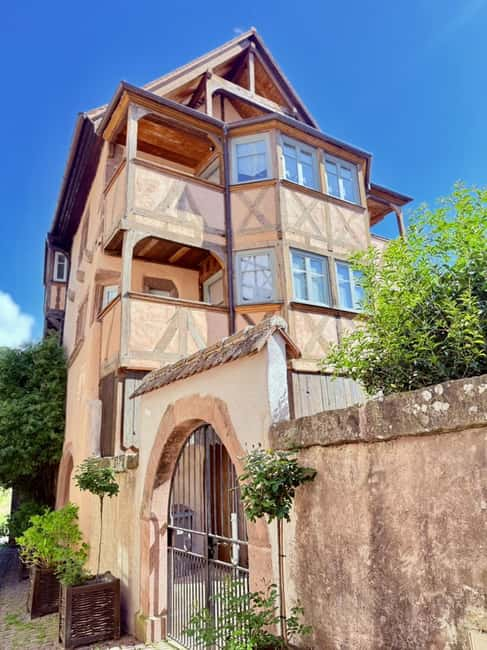
Review · FRANCE
Riquewihr: the pearl of the vineyards with a local guide and tastings
Riquewihr looks like a storybook village, but this walking tour is most interesting when it moves past the pretty facades. Your guide reads stone, timber, dates, coats of arms, and odd symbols as clues to the village’s past, then connects old legends with real events. I like the focus on overlooked details, and I like that the walk includes local tastings rather than stopping at history alone.
I also like the route’s mix of fortifications, noble houses, prisons, wine culture, and narrow lanes. It gives you several ways into Riquewihr’s story. The main consideration is language: the live tour is in French, and the walk is not suitable for people with mobility impairments. Its listed duration also needs a quick check, since the activity is advertised as 90 minutes while some of the description refers to two hours.
Key points to know
- The tour begins and ends at Place Fernand Zeyer, making it easy to plan around a visit to the village.
- Expect a story-led walk, with medieval defenses, 16th-century houses, local legends, and wine culture tied together.
- Riquewihr macarons are included, along with local sweet and savory specialties described during the experience.
- The guide speaks French, so basic French or translation support will help you follow the details.
- Géraldine led one particularly praised visit, including European historical context and Christmas atmosphere.
- Wear comfortable shoes, since the route uses historic streets and takes place in rainy weather too.
Why Riquewihr needs more than a photo stop
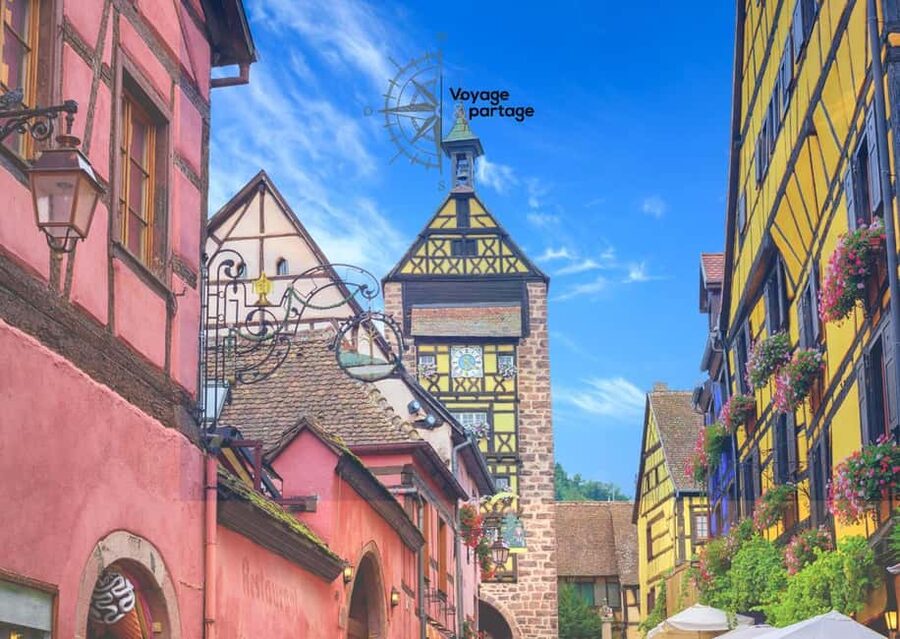
Riquewihr is easy to admire quickly. You enter a colorful old village, point your camera at timber-framed houses, notice flowers on balconies, and move on. That approach gives you attractive pictures but not much sense of why the place looks the way it does.
This tour asks you to slow down and read the village. A carved symbol, a date above a doorway, or a defensive wall becomes part of a larger story. You are not only looking at decoration. You are considering who built a house, what that family wanted to show, how trade shaped the town, and why protection mattered.
I like this approach because Riquewihr’s charm can otherwise flatten its past into a postcard. The guide places the village between several roles: fortified town, market center, and wine-growing community. Those roles explain why Riquewihr has substantial walls, imposing merchant homes, storage spaces, signs of local authority, and a public identity tied to vineyards.
The experience is also designed to challenge the usual fairy-tale image. You still see the picturesque side of Riquewihr, but you also hear about punishment, fear, accusations of witchcraft, and the practical business of protecting goods and people. That contrast gives the village more weight.
Vineyard walks with a guide around France:
- Saint-Emilion: Grand Cru Classé Guided Winery Visit & Picnic
★ 4.7 · 296 reviews - Alsace Wine Route Wineries & Tasting Small Group Guided Tour from Strasbourg
★ 5.0 · 229 reviews - Small Group Guided E-bike Tour in Nice’s Organic Vineyard
★ 5.0 · 220 reviews
Starting at Place Fernand Zeyer
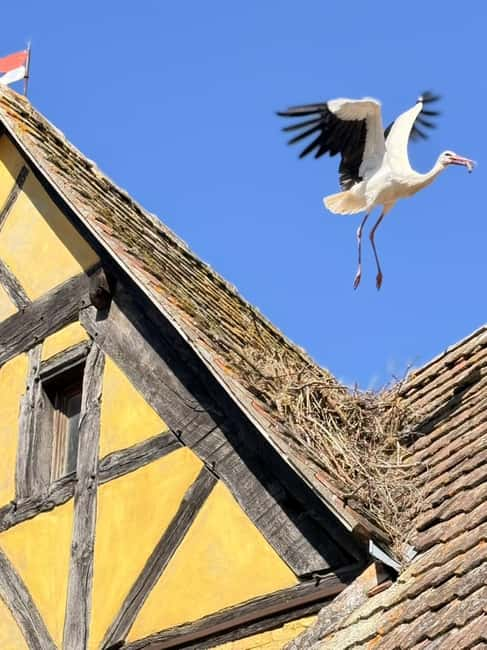
The meeting point is Place Fernand Zeyer, where the walking tour begins and later finishes. This simple out-and-back arrangement is useful if you are fitting the activity between other plans in Riquewihr. You do not need to arrange a second pickup point or figure out where the group ends.
From here, expect the guide to set the scene before leading you into the village’s old streets. The purpose is not simply to point out famous buildings. It is to establish how Riquewihr worked and why its position mattered.
The exact route can vary with the guide and conditions, so you should think of this as a guided reading of the old center rather than a rigid series of museum stops. That is a strength for a small historic village. The most useful moments may come from stopping beside an ordinary-looking doorway or turning into a lane you might otherwise ignore.
One practical point: the supplied information uses both 90 minutes and two hours. The main activity details list a duration of 90 minutes, while the longer description calls the visit two hours. Check the current start time and duration when booking, especially if you have a train, restaurant reservation, or another appointment afterward.
Fortified gates and the working town behind them
Riquewihr’s walls and fortified gates are among the clearest signs that this was more than a decorative wine village. The tour explains their connection with trade and defense, helping you see the old center as a place that needed to control movement and protect goods.
A gate is not just an entrance for visitors. It marks a boundary. Inside were homes, businesses, religious and civic structures, and the networks that supported trade. Outside lay routes connecting the town with the surrounding area. Your guide uses these physical features to explain how Riquewihr functioned when security and commerce were closely linked.
This part of the tour should suit you if you like history that begins with what is directly in front of you. You do not need to memorize dates before arriving. Instead, you can look at the walls and understand why they were built and what they reveal about the town’s importance.
The drawback is that old defensive streets are not designed like modern sidewalks. Surfaces may be uneven, and the tour specifically says it is not suitable for people with mobility impairments. Comfortable shoes are essential even for visitors who normally manage long city walks without trouble.
Merchant houses that reveal ambition
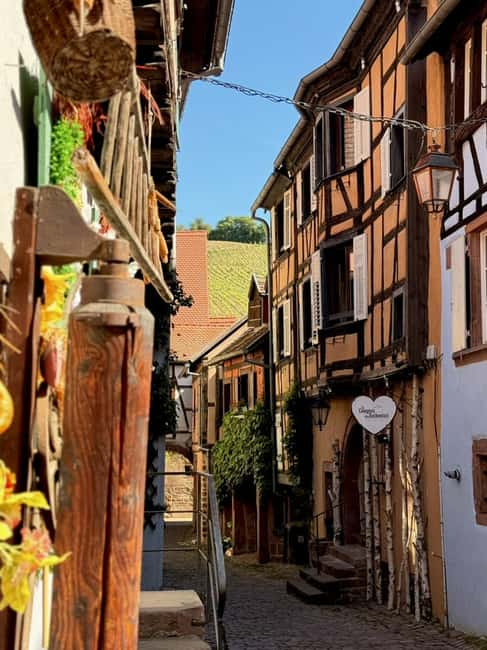
The 16th-century houses provide another strong section of the walk. Their facades carry frescoes, coats of arms, mottos, dates, and other signs of identity. The guide explains how these details reflect the ambitions of merchant families.
This is where the tour’s promise to read wood and stone like history books becomes practical. A facade can tell you that a family had money, wanted status, belonged to a particular trade, or wished to mark its place in the community. The houses are not simply pretty examples of Alsatian architecture. They are public statements.
You will likely appreciate this most if you enjoy looking at details that are easy to miss. Without a guide, you might admire a painted panel and continue walking. With context, you can ask what the symbol meant, why the date mattered, and how a private home expressed a family’s social position.
The guide also brings in local life and unusual anecdotes, rather than delivering only a list of architectural facts. That makes the walk easier to follow, especially for children who may not want a formal lecture. The activity is described as suitable for children, though the French-language format and walking conditions still matter when deciding if it fits your family.
Other vineyard visits we rate around France
- Saint-Émilion: Grand Cru Classé Winery Visit and Tasting
★ 4.6 · 1,118 reviews - Saint Emilion Half-Day Trip with Wine Tasting & Winery Visit from Bordeaux
★ 4.5 · 1,034 reviews - Saint-Émilion: Bordeaux Vineyard Tour and Wine Tasting
★ 4.8 · 578 reviews - Bordeaux: Vineyards Wine Tasting Half-Day Trip
★ 4.2 · 470 reviews
Symbols, legends, and the darker side of local history
Riquewihr’s symbols give the tour some of its mystery. Protective crosses, coded motifs, dates, and small messages are presented as clues. You will not simply hear that a building is old. You will be encouraged to notice the marks that people left behind and consider what they were meant to communicate.
The stories of Alsatian witches add a darker turn. The guide explains how some women were accused, tried, and sometimes burned when superstition influenced the law. This subject links popular belief with actual systems of justice. It also shows why local legends can be difficult to separate from historical fact.
I appreciate that this material is included because it keeps the visit from becoming too polished. Riquewihr’s beauty can make the past seem harmless. Stories of accusation and punishment remind you that older communities had real fears and harsh legal practices.
The thieves’ tower and old prisons continue that theme. Here, you learn about medieval justice, exemplary punishment, and collective fears. The stops are valuable because they show how authority worked in everyday life. A fortified village did not only protect trade. It also controlled behavior.
Some of this material may be unsettling for young children, so parents should decide based on their child’s interest and comfort. The tour is family-friendly in format, but its stories are not all light.
Secret passages and the quiet side of Riquewihr
The walk also seeks out inner courtyards, forgotten alleyways, and less obvious passages. These spaces offer a welcome change from the main postcard views. They show how much of an old town can remain private, tucked behind a public facade.
A courtyard can reveal the practical side of a historic house. A narrow lane can show how buildings were arranged around movement, work, and household life. The guide’s role is especially useful here because these places may not announce their importance. You might pass them without realizing that they form part of the village’s older structure.
This section gives the experience a more intimate pace. The major gates and decorated homes explain public life. The side lanes and courtyards hint at the routines behind it. I like the balance because it keeps the tour from becoming a procession of famous sights.
Do not expect access to every private space or a theatrical secret-passage adventure. The description promises a discreet side of Riquewihr for curious visitors, not unrestricted entry into private property. The appeal lies in seeing how the village is arranged and hearing the stories attached to places that are easy to overlook.
Wine culture as an economic story
Wine is not added as a side note. The tour treats it as a force that shaped Riquewihr’s economy, buildings, and reputation over centuries. That gives you a better way to understand why wine remains so closely tied to the village’s identity.
The guide connects wine-growing with the town’s development and social life. You learn to see the village not only as a preserved historic center but also as a place built around production, trade, storage, and reputation.
This is useful context if you plan to visit other wine villages in the Grand Est. Instead of treating each one as a collection of attractive houses, you begin to notice how vineyard culture influenced settlement patterns and family wealth.
The experience is not described as a full cellar tour or a dedicated wine tasting. Its main focus is the walking tour, with local products included along the way. If you want detailed wine education or a large selection of Alsatian wines, you should plan a separate tasting. If you want wine culture explained as part of the village’s story, this format makes good sense.
Macarons and local specialties at the end of the story
The tasting element adds a pleasant change of pace. Riquewihr macarons are specifically included, and the experience also includes local sweet and savory specialties according to the detailed account of Géraldine’s visit.
That matters because food gives history a physical connection. You are not only hearing about local life and then leaving. You get a small taste of regional traditions as part of the walk. The macarons are a particularly fitting choice because they are associated with Riquewihr and offer an easy, memorable finish.
The tasting should not be confused with a full meal. The available information does not specify the number or size of portions, nor does it promise a complete food tour. Think of it as a selection of local products that punctuates the historical storytelling.
One especially well-received visit led by Géraldine combined Riquewihr’s European historical setting with the Christmas atmosphere and several sweet and savory tastings. If you are visiting around the holiday season, the guide’s ability to connect seasonal details with the village’s past may add something special. Still, the exact guide and tasting selection can vary.
What the $41 price gets you
At $41 per person, the main value is the guide’s interpretation. You can walk Riquewihr’s streets for free, but you cannot easily identify the symbols, connect the houses with merchant families, or understand the link between wine, defense, and local authority without help.
The price includes the walking tour, a local guide, and local tasting elements such as the famous macarons. It also lists tips and vouchers for your stay, though the details of those vouchers are not specified. There is no separate tip included, so plan for that if you want to thank the guide.
For a 90-minute visit, $41 is not the bargain option if you only want a quick orientation and photographs. It becomes better value if you enjoy guided interpretation and want a focused introduction before exploring on your own.
The rating is 4.7 from three submitted ratings, with praise centered on the level of detail and the enjoyable guided experience. That is encouraging, but the small number means you should treat it as a useful signal rather than a guarantee. The strongest evidence is the fit between the tour’s content and your interests.
Language, weather, and practical comfort
The live tour is in French, and some material is shown in its original language. You will get the most from it if you understand French well enough to follow historical explanations and anecdotes. If you do not, translation support may help, but the activity does not promise a separate English-language guide.
The tour operates in rainy weather, so do not book it assuming poor conditions will automatically cancel the walk. Bring suitable rain protection and wear shoes that can handle historic streets. Comfortable footwear is specifically requested for good reason.
The activity is not suitable for people with mobility impairments. The old town setting, walking format, and possible uneven surfaces make this an important consideration rather than a minor note.
Cancellation is free up to 24 hours before the start, and you can reserve now and pay later. Those terms are useful if your route through the Grand Est is still changing, but they do not remove the need to check the actual meeting time and duration.
Who should book this Riquewihr walk
I would choose this tour if you want more than a quick look at colorful houses. It fits you especially well if you like local legends, architectural clues, medieval justice, wine culture, and food in one compact visit.
It is also a good choice for a first visit to Riquewihr. The guide can give you a framework for the village, after which you can return to the streets or shops that caught your attention. Families may enjoy the stories and tastings, provided children can manage the walk and the darker witchcraft and punishment material.
I would think twice if you need an English-language tour, have limited mobility, or want a dedicated wine tasting with extensive pours. I would also confirm the duration before booking because the supplied details alternate between 90 minutes and two hours.
Should you book it?
Book this walk if you want Riquewihr explained rather than merely photographed. The best reasons are the close look at symbols and houses, the connection between legends and documented events, and the small tasting of local specialties, including macarons.
Skip it if you prefer to wander independently, need a tour in another language, or want a full meal or formal winery visit. For the right visitor, $41 buys a compact, story-filled introduction to one of Alsace’s most famous villages, with enough practical detail to help you see beyond its pretty front.
FAQ
Where does the tour begin?
The tour begins at Place Fernand Zeyer in Riquewihr.
Where does the tour finish?
The walking tour returns to Place Fernand Zeyer.
How long does the activity last?
The main activity details list a duration of 90 minutes. Some of the longer description refers to two hours, so check the confirmed duration when booking.
What language is the tour in?
The live guide speaks French. Some content is presented in its original language.
Is a local guide included?
Yes. A local guide is included with the walking tour. Géraldine led one of the recorded visits, but the guide may vary.
Are food tastings included?
Yes. The experience includes a tasting of Riquewihr macarons and local products. One detailed visit included both sweet and savory specialties.
Is the tour suitable for children?
The activity is described as suitable for children. Keep in mind that some stories concern witchcraft accusations, trials, executions, and medieval punishment.
Is the tour suitable for people with mobility impairments?
No. The activity is listed as unsuitable for people with mobility impairments.
What should I wear?
Wear comfortable shoes for walking through the historic village. The tour takes place in rainy weather, so suitable rain protection is also sensible.
Newly reviewed vineyards around France
- Vosne-Romanée: Private Vineyards Walking Tour with Tasting★ 4.4 · 9 reviews
- Vineyard of the Alpilles by bike★ 4.6 · 8 reviews
- Vineyard tour and wine tasting in Davron★ 4.5 · 7 reviews
- Private Vineyard Tour and Wine Tasting in Bandol★ 5.0 · 16 reviews
- Vineyard visit in Gyropode, visit of Cave & Tasting Wines of Bandol★ 5.0 · 19 reviews
- Bike ride on the Wine Route from Sélestat★ 5.0 · 5 reviews
- Horse riding in the vineyards of Grimaud + wine tasting★ 5.0 · 3 reviews
- 1/2 day private Vintage tour, vineyards of Saint-Tropez★ 5.0 · 6 reviews
France Vineyard Tours, compared.
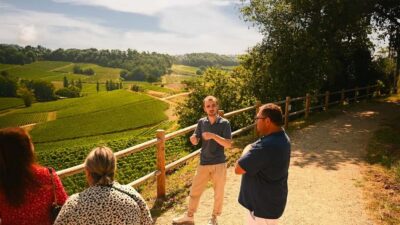
Saint-Émilion: Grand Cru Classé Winery Visit and Tasting
Read our review →
Saint Emilion Half-Day Trip with Wine Tasting & Winery Visit from Bordeaux
Read our review →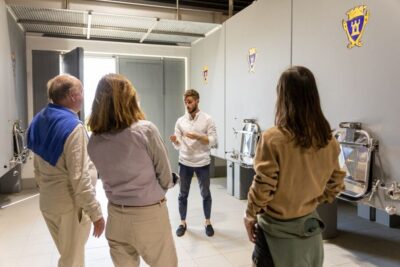
Saint-Émilion: Bordeaux Vineyard Tour and Wine Tasting
Read our review →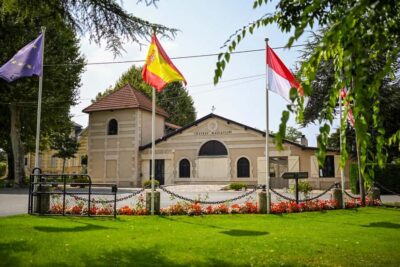
Saint-Émilion: Vineyard Walking Tour and Tasting
Read our review →
Small-Group Full-Day Tour of Côte de Nuits, Côte de Beaune Vineyards and Beaune Historical District
Read our review →
Lists this tour appears in