
Review · FRANCE
Saint-Émilion: 2 hours – Visit of the vineyard, the cellar and tasting
The most appealing part of this Saint-Émilion tour is its from vine to bottle approach. You walk among the estate’s plots, hear how the work changes through the year, see the tanks and equipment, then finish with four Château wines. I like the family connection, with Florent or his mother Marie-Anne explaining a fourth-generation estate, and I like the practical look at problems such as crop freezes, sustainability, and new wine production.
The main consideration is that the experience lasts about two hours, so it gives you a clear introduction rather than a long vineyard day. You also need to reach Château Haute-Nauve in Saint-Laurent-des-Combes yourself, since transport is not listed. Still, at $30.04 per person, the vineyard walk, cellar visit, and four-wine tasting make this a strong-value stop.
Key points at a glance
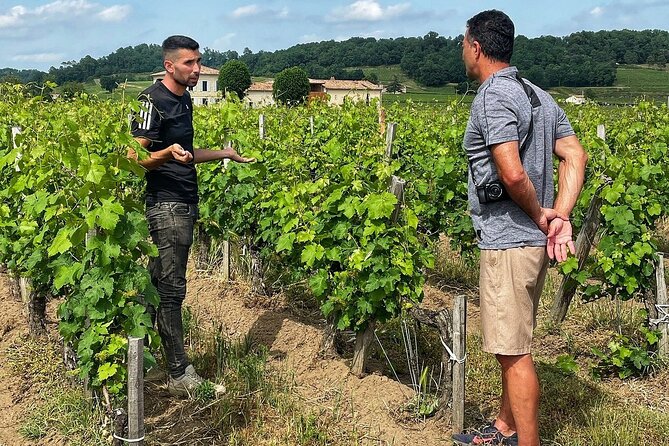
- A fourth-generation family estate: Florent or Marie-Anne explains the château’s past and present in a personal, direct way.
- The full production story: You move from vineyard plots to fermentation tanks, pumping, pressing, and barrel aging.
- Four wines in the tasting: The lineup includes a rosé, a Saint-Émilion, and two Saint-Émilion Grand Cru wines.
- Useful vineyard details: You learn how the work changes through the seasons and how the estate responds to crop freezes.
- Distinctive sights: A wind turbine and a six-meter-high wine bottle add character to the visit.
- Small-group format: The experience allows no more than 15 people, a good size for questions and conversation.
Starting at Château Haute-Nauve near Saint-Émilion
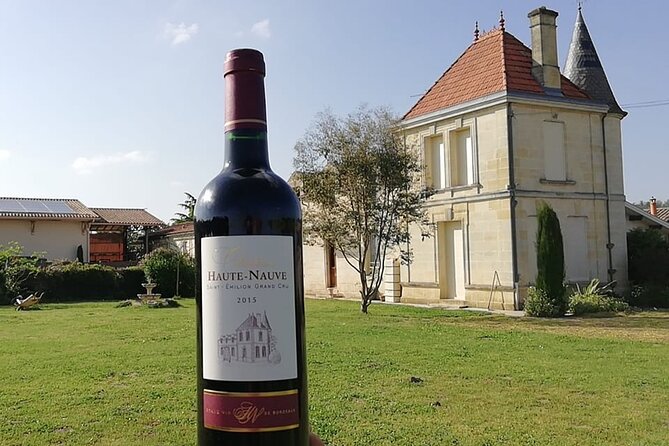
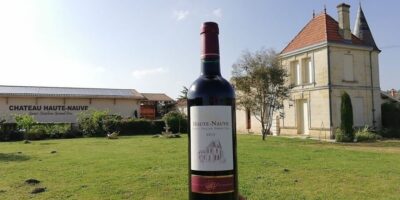
The visit begins at Château Haute-Nauve, at 1 Haute Nauve, 33330 Saint-Laurent-des-Combes, France. This is not a tour that starts in central Saint-Émilion and transfers you to the property. You should plan your route to the château carefully, especially if you are building the visit into a day of sightseeing around the wine region.
The setting matters here. Instead of meeting in a generic tasting room, you begin at the estate itself, where the vineyards, winery, and cellar are part of one working operation. That gives the tour a useful sense of place. You are not only tasting a finished product. You are seeing where the work begins and how each stage connects.
The group limit is 15 people. That is large enough to give the visit some energy but small enough for the guide to speak with the group rather than deliver a distant lecture. An English tour is offered, and the family’s friendly approach helps make technical subjects easier to follow.
More Wine Cellar Visits in France:
- Tour of a Vineyard, Winery & Cellar with Wine Tasting in Vouvray, Loire Valley
★ 5.0 · 77 reviews - Exclusive Champagne Cellars & Dom Perignon Vineyards tour
★ 5.0 · 32 reviews - Moet et Chandon Vineyards Cellars 7 tastings Private Champagne
★ 4.5 · 4 reviews
Walking the vineyard with Florent or Marie-Anne
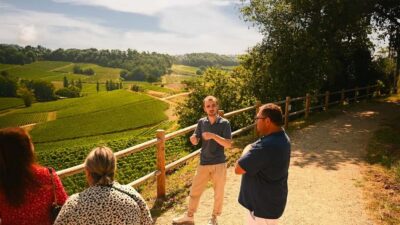
The first part takes you into the vineyard. Florent or Marie-Anne introduces the family’s fourth-generation connection to the estate and explains the particular character of the Saint-Émilion appellation.
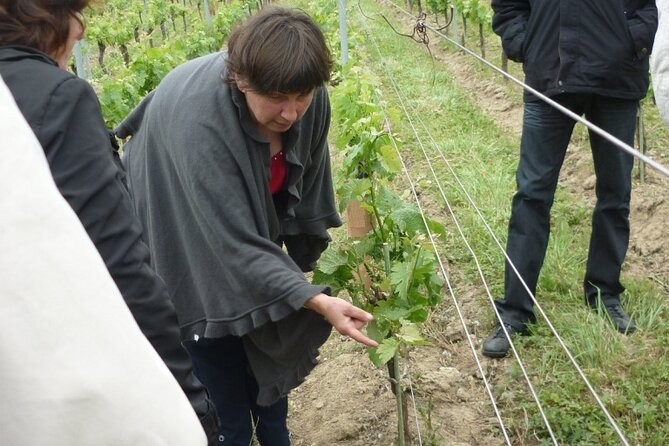
This part should appeal to you if you want more than a quick photo among the vines. You learn about different plots and how vineyard work changes throughout the year. The timing of pruning, growing, harvesting, and other tasks affects the final wine, so this seasonal view gives you a better way to understand why the same estate requires constant attention.
The guide also discusses the work of a modern winegrower. Crop freezes are one of the challenges facing the château, and the estate is working on sustainability, diversification, and the development of new wines. That is useful context because it places Saint-Émilion wine production in the present day rather than treating it as a fixed old tradition.
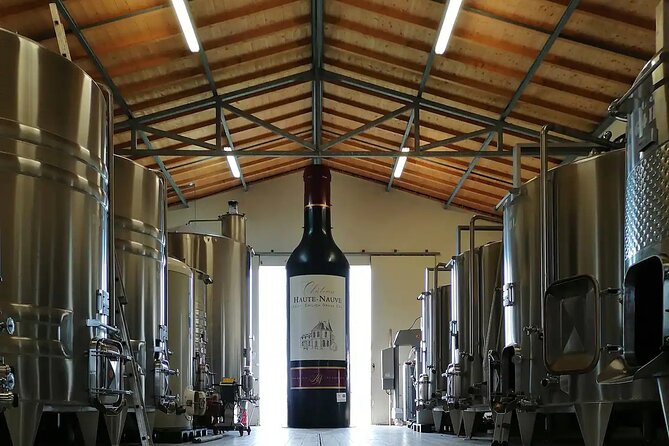
You will also see two unusual features: a wind turbine and a six-meter-high wine bottle. They give the property a bit of personality and provide a break from technical explanations. The wind turbine points to the estate’s effort to address environmental concerns, while the oversized bottle is simply a memorable landmark.
I particularly like this vineyard section because it connects the bottle in your hand to real decisions in the field. Wine tasting can become abstract when you only hear terms about soil, appellation, or aging. Here, the information begins with the vines and the work required to keep them productive.
Inside the winery: fermentation, pumping, and pressing
After the vineyard, you enter the winery to follow the production process. The visit covers fermentation, pumping, and pressing, as well as the large tanks and machines used after the harvest.
For many people, this will be the most useful part of the tour. You get to see the equipment that turns harvested grapes into wine, while the guide explains what each stage does. Fermentation is a key step, but pumping and pressing are just as important to understanding how the wine is handled. Seeing the machinery makes those terms less vague.
The tour does not present winemaking as a single dramatic moment. Instead, it shows a chain of careful jobs. Grapes arrive, the juice is managed, the wine is moved through the facility, and each decision affects the style and quality of the finished bottle.
The small-group size helps here. If you have a question about a tank, a machine, or the order of production, there is a reasonable chance to ask it. The English guide, especially Florent, is described as humorous and easy to talk with, which should keep the technical material from feeling stiff.
There is also a business side to the visit. The tour includes discussion of the château’s marketing, not just production. That is a worthwhile detail because a family winery must handle both the farming and the selling. You see a more complete picture of what it takes to operate a wine estate.
The barrel cellar and the final aging stage
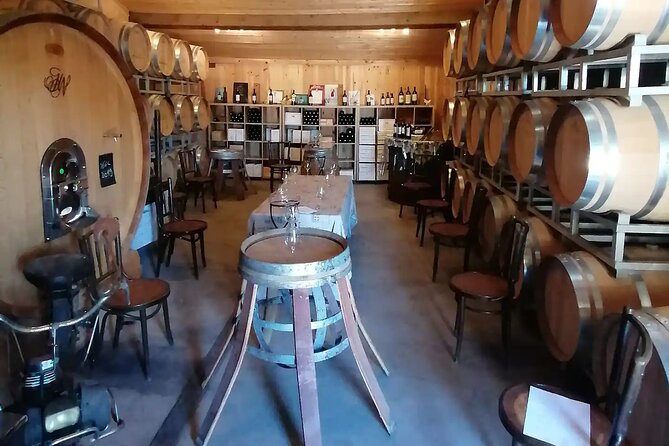
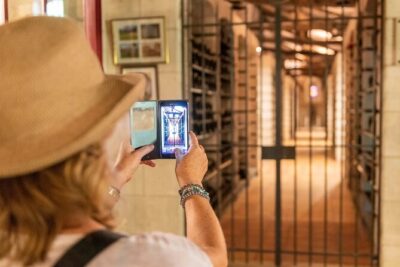
The route ends in the barrel cellar, where you learn how the wines are aged. This is a quieter part of the experience, but it rounds out the production story.
A cellar visit helps explain why a wine can change after fermentation is complete. Aging is not merely storage. The methods used in the barrel cellar influence the wine’s character before it reaches the bottle. The guide explains the approach used at Château Haute-Nauve, allowing you to connect what you saw in the tanks with the wines you are about to taste.
The cellar also gives the tour a natural rhythm. You begin outdoors with the vines, move into the active winery, and finish with the slower stage of aging. That order makes sense and keeps the two-hour visit focused.
Do not expect a long cellar exploration with many separate rooms. The scheduled visit is compact, and the main goal is to understand the process. If you want an especially lengthy technical study of barrels or production methods, a longer specialist tour may suit you better.
Two-hour vineyard visits around France:
- 2-hour walk – Castles and vineyards
★ 4.5 · 11 reviews - Champagne vineyards: 2-hour guided tour of the vineyards in a Buggy
★ 5.0 · 3 reviews - Lausanne: 2-Hour Lake Geneva Cruise Along Lavaux Vineyards
★ 4.2 · 171 reviews - 2 Hour Vineyard Trail Ride
★ 5.0 · 31 reviews
Tasting four Château wines
The tasting is the final part of the visit, with four wines served from the estate:
- A rosé
- A Saint-Émilion
- Two Saint-Émilion Grand Cru wines
This is a well-chosen lineup for a short introduction. You get to compare different styles rather than taste four nearly identical examples. The rosé gives you a lighter starting point, while the Saint-Émilion and two Grand Cru wines let you explore the appellation in more depth.
The two Grand Cru wines are an important part of the value. Grand Cru is a familiar name to many visitors, but tasting two examples after learning how the estate works gives the designation more meaning. You can listen for differences between the wines and ask how vineyard plots, production, or aging affect what is in the glass.
The tasting is guided, so this is not simply four pours with no explanation. The guide can connect the wines to the vineyard and cellar stages you have just seen. That makes the tasting more satisfying for beginners, while people who already know Bordeaux wines can use the time to ask more specific questions.
Alcoholic beverages are included in the price, with all four Château wines part of the experience. There is no food menu listed, so do not plan on this as a meal replacement. If you need something substantial before or after the tasting, arrange that separately.
What makes the family approach useful
The estate is presented through its family story, with four generations connected to the property. That detail changes the tone of the visit. You are hearing how a specific family manages a particular château, rather than receiving only a broad account of Bordeaux wine.
Florent is listed as one of the possible guides, and his approach comes across as warm, humorous, and professional. Marie-Anne, his mother, may also lead the visit. Since the tour is offered in English, confirm the language when booking if that matters to your plans.
This personal format is especially helpful when the subject becomes technical. A guide who is willing to explain the work plainly can make fermentation, pressing, or crop protection easier to understand. It also gives you a chance to ask about the challenges facing the estate, including freezes, sustainability, diversification, and new wines.
The family setting does not mean the visit avoids business realities. Marketing, production equipment, and environmental measures all form part of the story. I prefer that balance. You get tradition, but you also see a winery trying to adapt.
Is $30.04 a fair price?
At $30.04 per person, I consider this a good value for a two-hour wine experience in the Saint-Émilion area. The price includes the vineyard walk, winery and barrel-cellar visits, an English-language tour, and four wine tastings, including two Grand Cru wines.
The value is strongest if you want a complete introduction in a short window. A simple tasting can tell you what a wine tastes like, but it will not show you the vineyard plots, tanks, presses, or barrels. Here, the tasting is tied to the production story.
The price is less compelling if you are looking only for a quiet glass of wine or a long meal. This is an educational estate visit, not a restaurant experience. You are paying for access to the working château and for the guide’s explanation of how the wine is made.
The average booking lead time is 12 days, which suggests you should not leave it until the last minute during a busy Saint-Émilion visit. Confirmation is sent within 48 hours, subject to availability. The group limit of 15 also helps explain why advance planning can be useful.
Who will enjoy this Château Haute-Nauve visit?
I would recommend this tour to first-time wine visitors who want the basic process explained in a clear order. The route from vineyard to winery to cellar makes it easy to follow, even if you do not know much about Bordeaux wine.
It also suits couples, families with adult children, and small groups looking for a personal estate visit. The service is offered in English, and the tour can work well for anyone who prefers conversation and questions over a large coach-group presentation.
Wine enthusiasts should find enough substance in the appellation discussion, the seasonal vineyard work, the production equipment, and the two Grand Cru pours. Still, serious students of winemaking may want a longer and more technical format than two hours provides.
Because the experience includes alcohol, it is best suited to adults who want to taste four wines. Service animals are allowed, and most people can participate. The actual vineyard walk may be worth keeping in mind if you have mobility concerns, since part of the visit takes place outdoors, but the available information does not provide a detailed accessibility breakdown.
Practical details before you book
The experience lasts about two hours and ends back at the meeting point. There is no listed transportation from Saint-Émilion, so you should check how you will reach Château Haute-Nauve in Saint-Laurent-des-Combes before committing to a time.
English is offered. The tour may be led by Florent or Marie-Anne, and the family’s direct involvement is one of the main reasons to choose this château over a more commercial tasting stop.
You can cancel for a full refund up to 24 hours before the local start time. Changes or cancellations made less than 24 hours before the start are not accepted for a refund. The experience also requires a minimum number of participants, so if the provider cancels for that reason, you are offered another date or experience, or a full refund.
Should you book it?
Book this tour if you want a short, well-rounded introduction to Saint-Émilion wine with real access to the vineyard, winery, and barrel cellar. The family connection, small group, English option, and tasting of two Grand Cru wines give it more substance than a quick tasting-room stop.
Skip it if you want transportation from central Saint-Émilion, a full meal, or a long technical workshop. For most visitors with their own way to the château, the $30.04 price is fair, and the two-hour format leaves room for other wine estates or sightseeing in the area.
FAQ
How long does the Château Haute-Nauve tour last?
The experience lasts approximately two hours and ends back at the meeting point.
Where does the tour begin?
It begins at Château Haute Nauve, 1 Haute Nauve, 33330 Saint-Laurent-des-Combes, France.
Is the tour available in English?
Yes. The experience is offered in English.
Which wines are included in the tasting?
The tasting includes four Château wines: one rosé, one Saint-Émilion, and two Saint-Émilion Grand Cru wines.
How many people can join the tour?
The activity has a maximum of 15 participants.
Can I cancel for a full refund?
Yes. You can cancel at least 24 hours before the local start time for a full refund. Cancellations made less than 24 hours before the start are not refundable.
Newly reviewed vineyards around France
- Vosne-Romanée: Private Vineyards Walking Tour with Tasting★ 4.4 · 9 reviews
- Vineyard of the Alpilles by bike★ 4.6 · 8 reviews
- Vineyard tour and wine tasting in Davron★ 4.5 · 7 reviews
- Private Vineyard Tour and Wine Tasting in Bandol★ 5.0 · 16 reviews
- Vineyard visit in Gyropode, visit of Cave & Tasting Wines of Bandol★ 5.0 · 19 reviews
- Bike ride on the Wine Route from Sélestat★ 5.0 · 5 reviews
- Horse riding in the vineyards of Grimaud + wine tasting★ 5.0 · 3 reviews
- 1/2 day private Vintage tour, vineyards of Saint-Tropez★ 5.0 · 6 reviews
France Vineyard Tours, compared.
Saint-Émilion: Grand Cru Classé Winery Visit and Tasting
Read our review →
Saint Emilion Half-Day Trip with Wine Tasting & Winery Visit from Bordeaux
Read our review →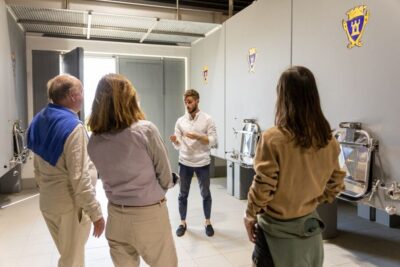
Saint-Émilion: Bordeaux Vineyard Tour and Wine Tasting
Read our review →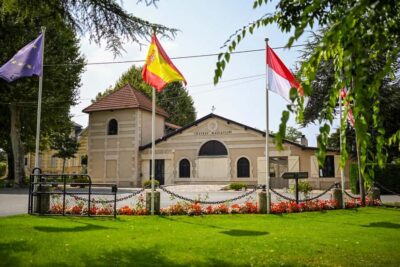
Saint-Émilion: Vineyard Walking Tour and Tasting
Read our review →
Small-Group Full-Day Tour of Côte de Nuits, Côte de Beaune Vineyards and Beaune Historical District
Read our review →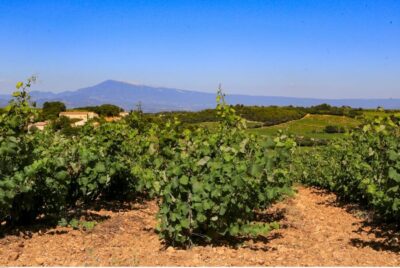
Lists this tour appears in