
Review · SAINT-ÉMILION
Saint-Émilion: Bordeaux Vineyard Tour and Wine Tasting
The most appealing part of this Saint-Émilion tour is its family-owned château setting. You learn how five generations have worked the estate, then step into the cellar to see how wine moves from grape to barrel to bottle. It feels more personal than a large commercial tasting room.
I like the tidy one-hour format and the chance to taste three Saint-Émilion Grand Cru wines for $21. Guides including Valentin, Chloé, and Matthieu are known for clear English, friendly explanations, and patience with questions. The tradeoff is simple: this is an introduction, not a long vineyard day. If you want a broad tasting across several estates, one château will feel limited.
Key points to know before booking
- Three wines are included: The tasting gives you a useful comparison within one estate, with the wines generally presented as three reds.
- The château is on Pavie Hill: Its position helps explain the local soil, grape growing, and character of the wines.
- Five generations still shape the estate: The family story gives the tour a human scale.
- The cellar is part of the visit: You hear how fermentation, barrel work, and aging affect the finished wine.
- It works well on a short Saint-Émilion day trip: The property is described as walkable from both the train station and the village.
- The group is limited to eight people: That leaves room for questions and gives the hour a relaxed feel.
A one-hour introduction to Saint-Émilion wine
Saint-Émilion can feel like two places at once. The village is a medieval stone town filled with steep lanes and impressive buildings, while the surrounding country is covered with vineyards and small wine estates. Château Saint Georges Côte Pavie gives you a practical link between the two.
This is not a bus tour through several vineyards. You meet at the château and stay there for the full experience. That makes the visit easy to fit into a day, especially if you arrive by train from Bordeaux and want time to see the village as well.
The tour is guided in English or French, and the group size is capped at eight. That matters here. Wine explanations can become dull when delivered to a crowd, but a small group lets you ask about grape varieties, soil, barrels, or anything else that catches your attention.
The 4.8 rating from 578 reviews reflects a very consistent experience, especially around the guides. Valentin is often singled out for his humor and clear explanations, while Chloé and Matthieu are also praised for making the hour welcoming and easy to follow. Names and staffing can change, but the pattern is clear: the guide has a large role in the quality of the visit.
Other vineyard visits we rate around France
- Saint-Émilion: Grand Cru Classé Winery Visit and Tasting
★ 4.6 · 1,118 reviews - Saint Emilion Half-Day Trip with Wine Tasting & Winery Visit from Bordeaux
★ 4.5 · 1,034 reviews - Bordeaux: Vineyards Wine Tasting Half-Day Trip
★ 4.2 · 470 reviews
Reaching Château Saint Georges Côte Pavie
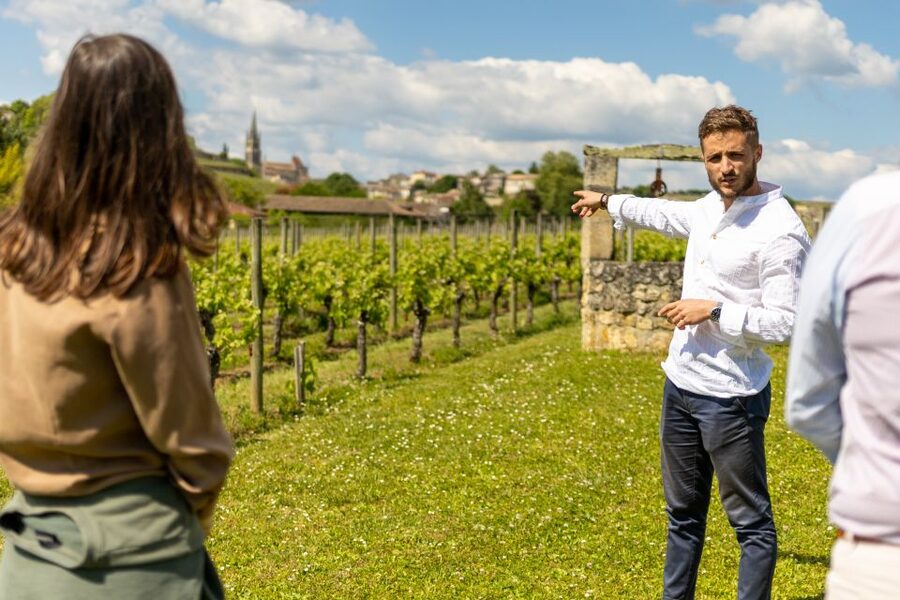
The meeting point is Château Saint Georges Côte Pavie. The estate is outside the central village but close enough to reach on foot. The available walking estimates vary, with directions described as roughly 15 to 20 minutes from Saint-Émilion village and less than a kilometer from the train station.
That location is one of the tour’s strongest practical features. You can arrive by train from Bordeaux Saint-Jean, visit the château, and continue into Saint-Émilion without needing a car. You can also spend the morning in the village, take the afternoon tour, and finish with the tasting.
Give yourself extra time to identify the correct property. There are two Saint George-related château names in the area, and at least two people have gone to the wrong one. The exact meeting point is Château Saint Georges Côte Pavie, not simply any château called Saint George.
The walk itself is part of the appeal. You leave the compact medieval center and move toward open vineyards and the Pavie Hill setting. If rain arrives, the outdoor portion may be less comfortable, although the cellar and tasting still provide the main substance of the visit.
The Pavie Hill setting and the family story
The tour begins with the estate’s background and the family that has worked it for five generations. That detail is more useful than a long list of dates. It helps you understand that the property is not just a label attached to a bottle, but a working family business shaped over time.
You hear about the grape varieties used at the château and how the soil affects the vines. Saint-Émilion wine can seem confusing at first because a bottle’s identity depends on the appellation, the estate, the blend, the vintage, and the ground beneath the vines. This introduction gives you a framework for sorting out those details.
Pavie Hill is also a helpful subject because location is central to Bordeaux wine. The guide explains why this particular position is considered favorable and how the soil supports the quality of the grapes. You do not need prior wine knowledge to follow along. The explanations are aimed at curious beginners as much as experienced tasters.
The vineyard walk is not a long agricultural tour. It is a short part of a compact visit, so do not book this expecting hours among the vines. On a wet day, the outdoor section may be limited. Still, the setting gives the cellar and tasting a stronger sense of place.
Inside the cellar: from grapes to barrels
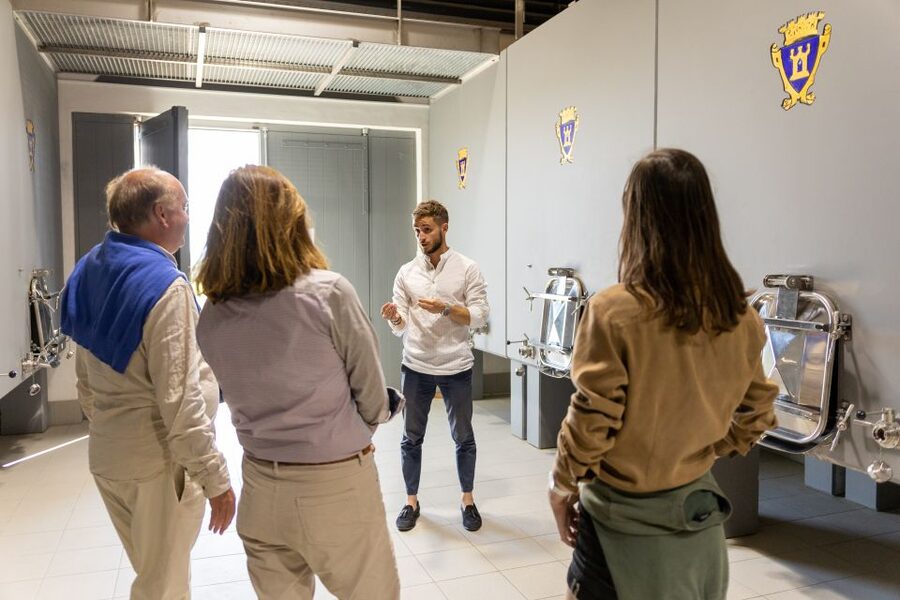
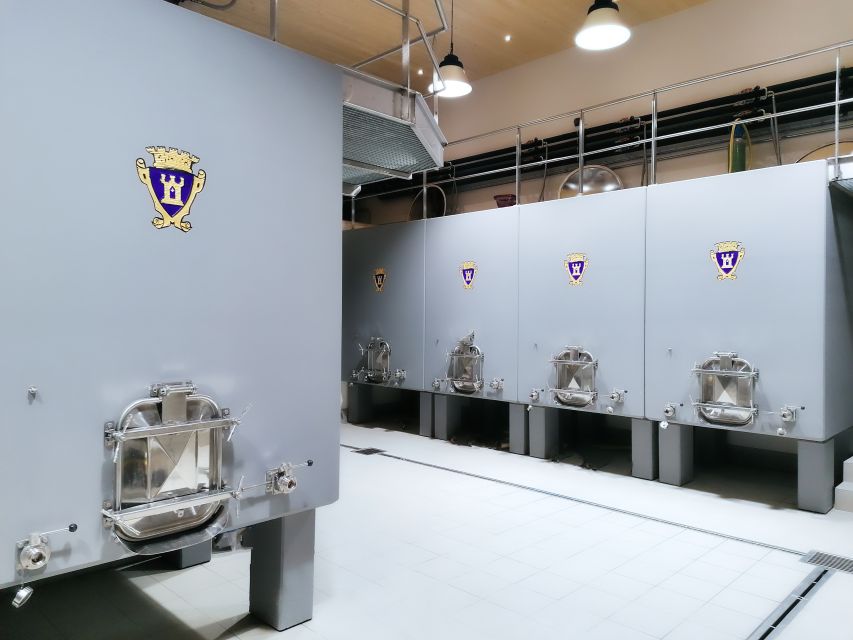
The cellar visit is where the tour becomes more concrete. Instead of only hearing about wine in the abstract, you see the space connected to production and aging. The guide explains what happens after harvest and how the wine changes while it rests in barrels.
The focus is on the winemaking and aging process. You can ask how grape varieties are handled, why the wine spends time in barrels, and how the finished bottles fit the Saint-Émilion Grand Cru category. The precise details may vary with the day’s guide, but the format is designed to make the basic process understandable.
I like this part for first-time wine drinkers. Tasting three wines without any production context can leave you with little more than a favorite glass. Seeing the cellar first gives you a reason to pay attention to color, aroma, texture, and finish when the glasses arrive.
The cellar also adds a sense of place that a shop tasting cannot match. You are tasting wine at the property where the work happens, with the family history and local soil still fresh in your mind. That connection is modest but meaningful.
Same grapes, a different estate to taste:
- Half-Day Wine tour across Bordeaux’s Vineyards
★ 3.5 · 429 reviews - Saint-Émilion: Vineyard Walking Tour and Tasting
★ 5.0 · 404 reviews - Small-Group Full-Day Tour of Côte de Nuits, Côte de Beaune Vineyards and Beaune Historical District
★ 5.0 · 364 reviews - From Avignon: Half-Day Great Vineyards Tour
★ 4.8 · 337 reviews
Three Bordeaux wines at the tasting table
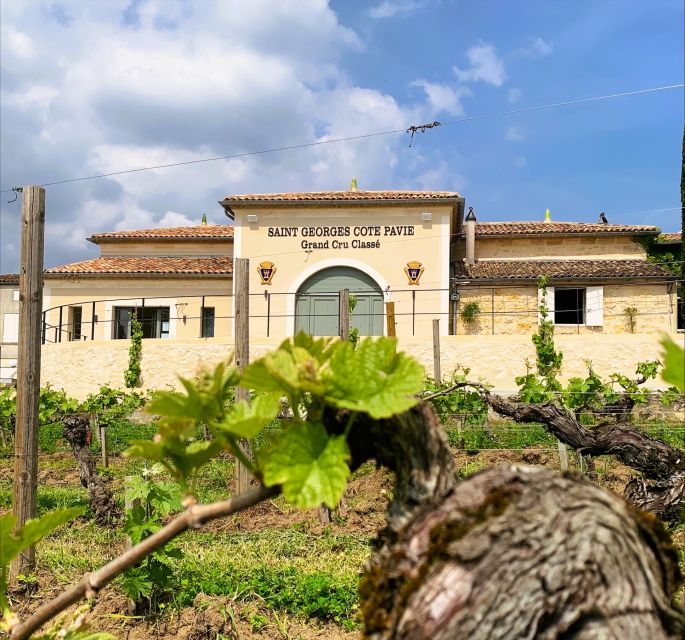
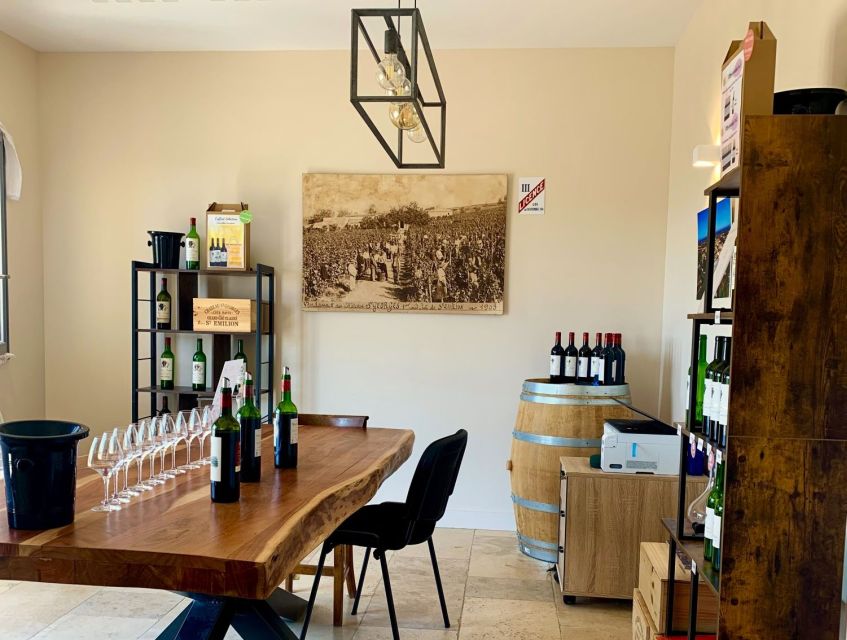
The tasting includes three high-quality wines from the château. The available details describe them as three reds, including the estate’s landmark wine in at least some tastings. This is not a wide regional comparison, but it is a useful look at how one producer presents its wines.
You may notice differences in structure, fruit, oak, or finish from one glass to the next. The point is not to identify every grape or sound like a professional. The point is to compare, ask questions, and discover what you like.
The guides explain the wines in a friendly, straightforward way. One earlier visit even included a discussion of how cheese acidity and lactic qualities can affect the taste of wine. That sort of practical pairing advice can be more useful than formal tasting vocabulary.
A small point to keep in mind: the tour is stronger on wine production and estate background than on a formal tasting lesson. One person specifically wanted more guidance on how to taste. If you are hoping for a detailed class on swirling, smelling, evaluating tannins, and pairing, ask questions during the tasting rather than assuming the session will cover all of that automatically.
The three pours make the $21 price especially attractive. At that rate, you are paying for a guided visit, the château setting, cellar access, and three wines. The value is best for someone who wants a focused introduction. It is less suitable if your goal is a full-day wine education or a large number of bottles from different producers.
Why the guides make such a difference
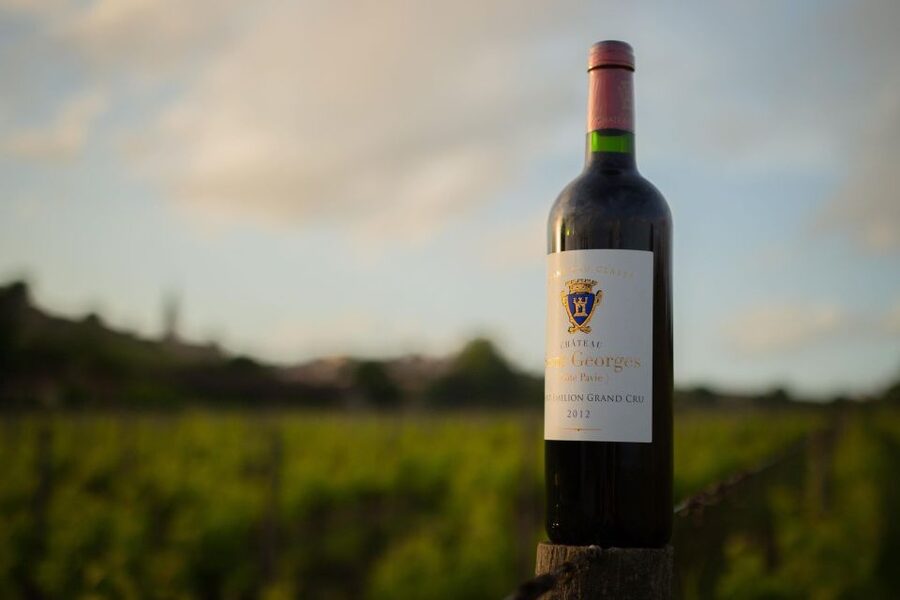
This experience depends heavily on the person leading it. The strongest descriptions point to guides who are warm, well-informed, conversational, and willing to stop for questions. Valentin is repeatedly praised for his English, humor, and patient approach. Chloé is described as welcoming and precise, while Matthieu is noted for his friendly manner and strong grasp of the region.
That matters because wine tours can easily become too technical. Here, the explanations are generally delivered in plain language, so beginners can follow without feeling out of place. At the same time, the guide can offer enough detail for people who already know something about Bordeaux.
The small group limit of eight helps. You are not lost at the back of a crowd, and the guide can respond to individual questions. On one occasion, only two people booked, turning the scheduled visit into an unexpected private tour. You should not count on that happening, but the limited capacity makes a quiet visit possible.
English and French are the stated tour languages. If you are more comfortable in English, the available guide feedback suggests that English explanations are a regular part of the experience.
Fitting the château into a Saint-Émilion day
The best plan is to treat this as one part of a Saint-Émilion visit, not as the entire day. Start with the medieval village, allow time for its architecture and steep lanes, then walk out to the château for the scheduled hour. After the tasting, you can return toward the village or station.
The timing is especially useful for a short day trip. A one-hour tour does not consume the whole afternoon, and the walk between the main points gives you a chance to see more of the area. The 4:30 p.m. start has worked well for people who spent earlier hours in the village, though you should check the available start times for your date.
Saint-Émilion itself is a major part of the appeal. The château visit gives you wine context, while the village supplies the medieval architecture and atmosphere. If you only visit the estate and skip the town, you miss half the reason to come here.
Plan your return carefully if you are using the train. The property is walkable from the station, but the tour takes a full hour and you will want time for the walk. The provided information confirms that the train connection from Bordeaux is practical, but it does not give a guaranteed timetable, so check your departure before booking a late visit.
Who should book this experience
I would choose this tour if you want a compact, good-value introduction to Bordeaux wine. It suits first-time wine tasters, couples, solo visitors, and anyone making a short Saint-Émilion trip from Bordeaux.
It is also a good fit for people who prefer a small family estate to a large organized attraction. The five-generation story, cellar visit, and Pavie Hill setting give the experience a local feel without demanding a full day.
You should think twice if you dislike walking, have no interest in wine, or need a child-friendly activity. The tasting is for people over 18, and children under 18 are not accepted. Pregnant women are also listed as unsuitable for this activity.
Wine experts may find the tour too brief, especially if they want several estates, older vintages, or a detailed technical seminar. Even then, the price makes it a sensible add-on rather than a major commitment.
Booking details and final advice
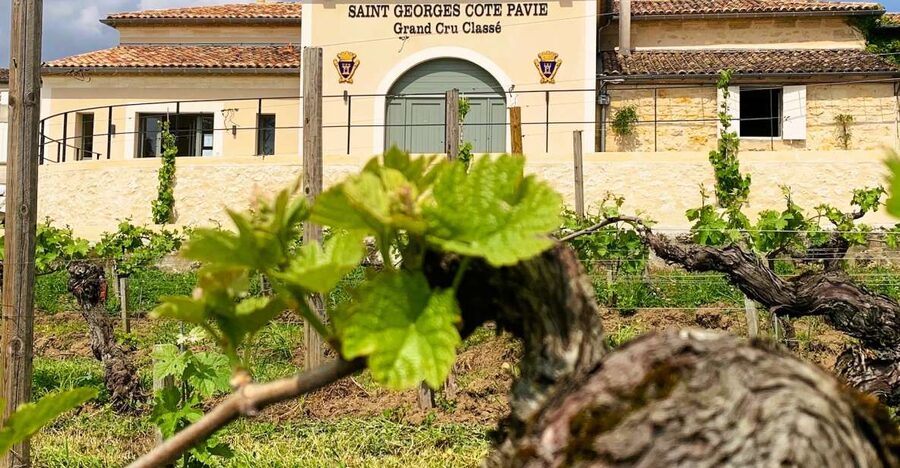
The cost is $21 per person, and the tour lasts one hour. It includes the vineyard visit, guided château tour, cellar explanation, and three wine tastings. You can cancel up to 24 hours before the start for a full refund, and the reserve-now-pay-later option keeps your plans flexible.
I would book this tour if you want to understand what makes Saint-Émilion wine different while keeping your schedule open for the village. The strongest reasons are the small group, the walkable location, the family history, and the three glasses included in the price.
I would not book it as your only Bordeaux wine experience if you want a broad comparison of producers. For that, you need a longer regional tour. But for one focused hour at a working château, Château Saint Georges Côte Pavie offers a clear, friendly, and fairly priced introduction.
FAQ
Where does the Saint-Émilion wine tour meet?
The meeting point is Château Saint Georges Côte Pavie.
How long does the tour last?
The experience lasts one hour.
How many wines are included?
The tasting includes three high-quality wines from the château. The available details describe them as red Saint-Émilion wines.
Is the tour offered in English?
Yes. The tour is available in English and French.
How many people can join the group?
The group is limited to eight participants.
Can I walk to the château from Saint-Émilion?
Yes. The château is described as walkable from the village and the train station. Walking estimates given for the route range from about 15 to 20 minutes from the village, with the station less than one kilometer away.
Is the tasting open to people under 18?
No. Participants must be over 18 to take part in the wine tasting, and children under 18 are not accepted.
Is the activity suitable for pregnant women?
No. Pregnant women are listed as unsuitable for this activity.
Can I cancel the booking?
Yes. You can cancel up to 24 hours in advance for a full refund. A reserve-now-pay-later option is also available.
Newly reviewed vineyards around France
- Vosne-Romanée: Private Vineyards Walking Tour with Tasting★ 4.4 · 9 reviews
- Vineyard of the Alpilles by bike★ 4.6 · 8 reviews
- Vineyard tour and wine tasting in Davron★ 4.5 · 7 reviews
- Private Vineyard Tour and Wine Tasting in Bandol★ 5.0 · 16 reviews
- Vineyard visit in Gyropode, visit of Cave & Tasting Wines of Bandol★ 5.0 · 19 reviews
- Bike ride on the Wine Route from Sélestat★ 5.0 · 5 reviews
- Horse riding in the vineyards of Grimaud + wine tasting★ 5.0 · 3 reviews
- 1/2 day private Vintage tour, vineyards of Saint-Tropez★ 5.0 · 6 reviews
Saint Emilion Vineyard Tours, compared.
Saint-Émilion: Grand Cru Classé Winery Visit and Tasting
Read our review →
Saint-Émilion: Vineyard Walking Tour and Tasting
Read our review →
Saint-Emilion: Grand Cru Classé Guided Winery Visit & Picnic
Read our review →
Saint-Émilion: Family Vineyard Visit with Wine Tasting
Read our review →
Saint-Emilion: Morning Tour with Wine Tasting & Snack
Read our review →
Saint-Emilion : Tasting of 4 wines in a family vineyard
Read our review →
Private ride through the vineyards from Saint-Emilion – 1h30
Read our review →Lists this tour appears in